✓ 100% Free Service  •  ✓ No Obligation  •  ✓ Licensed Pros Only
Home Carlsbad Ductwork

Ductwork in Carlsbad, CA

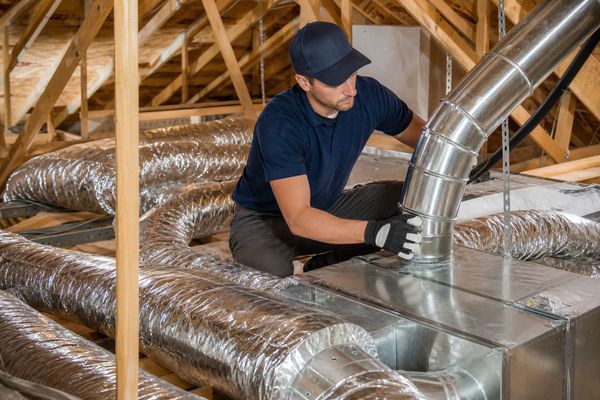
The duct system in your home is the hidden backbone of your central HVAC setup — it determines how effectively conditioned air reaches every room, and poorly designed or leaky ducts can undermine even the most efficient heating and cooling equipment. Homeowners in Carlsbad often discover that ductwork problems are the root cause of uneven temperatures, high energy bills, and dusty indoor air.
Or call us: (888) 252-5238
Licensed & Pre-Screened Contractors
💰 Best Price Guarantee
Fast & Free — No Obligation
📊 Transparent Pricing Comparison
🏠 Local Experts Who Know Your Area
🕐 Same-Day Quotes Available
AI contractor matching logo
AI Matched Contractors
Our technology helps match you with trusted, top-rated HVAC pros so you can compare price, service, equipment, and warranty.
Get Your Free Quote Now
Free
Duct Inspections
1–3 Day
Completion
Up to 30%
Energy Savings
100%
Licensed Pros
3 Free
Quotes to Compare
Ductwork service in Carlsbad CA
Understanding Ductwork

What Is Ductwork & When Do You Need It?

Ductwork is the network of metal, flexible, or fiberboard channels that distribute conditioned air from your central HVAC system — furnace, air handler, or heat pump — throughout your home. Supply ducts carry treated air to each room through registers, while return ducts pull room air back to the HVAC unit to be conditioned again. The design, size, and condition of this network directly controls comfort, efficiency, and air quality throughout the house. You may need ductwork services if your home has rooms that never reach the right temperature, if you're hearing unusual airflow noise from vents, or if your energy bills seem high relative to your usage. Ductwork problems are also common in homes that have been remodeled without updating the duct layout, in older properties where ducts were never insulated, and in new construction where a duct system needs to be designed and installed from scratch. Homes transitioning from no central air — such as those adding a split system for the first time — also require entirely new duct installation.
Common ductwork services includes:

• New duct system design and installation
• Duct sealing (Aeroseal or mastic application)
• Duct repair (tears, disconnected sections, crushed flex duct)
• Full duct replacement (aging or contaminated systems)
• Duct insulation installation or upgrade
• Zoning system installation with dampers and controls
• Duct testing and blower door diagnostics
Your duct system is the hidden backbone of your HVAC setup — leaky, damaged, or poorly designed ducts can waste energy and create uncomfortable rooms. Comparing quotes from multiple licensed professionals ensures you get the right solution and fair pricing.
Why Act Fast

Top Reasons Carlsbad Homeowners Need Ductwork

Duct Leaks Waste a Significant Amount of Conditioned Air

Studies by energy agencies consistently find that typical homes lose 20–30% of conditioned air through duct leaks before it reaches living spaces — meaning your HVAC system works substantially harder than it needs to. Professional duct sealing recovers that lost capacity and directly reduces operating costs.

Ductwork Design Determines HVAC System Performance

Even a high-efficiency heat pump or furnace will underperform if the duct system restricts airflow, has undersized returns, or delivers air to the wrong parts of the home. Properly designed ductwork — sized through Manual D calculations — is what allows HVAC equipment to operate as rated.

Leaky Ducts Pull Contaminants Into Living Spaces

When ducts run through unconditioned spaces like attics or crawl spaces and have gaps or loose connections, the negative pressure inside the duct draws in attic dust, insulation fibers, mold spores, and outdoor air. Sealing ducts improves indoor air quality alongside energy efficiency.

Zoning Systems Require Properly Configured Ducts

If you want to control temperatures independently in different areas of your Carlsbad home, a duct zoning system uses motorized dampers within the duct network to route airflow where it's needed. This capability requires a duct system designed to handle variable airflow without creating pressure problems.

Old Ducts May Contain Health Hazards

Homes built before the 1980s may have duct systems that include asbestos-containing materials, improperly installed fiberglass duct board, or heavy microbial contamination from years of moisture intrusion. In these cases, full duct replacement is safer than attempting to clean or seal the existing system.
HVAC technician performing ductwork inspection in Carlsbad

Ready to Compare Ductwork Quotes in Carlsbad?

Get 3 quotes from licensed, vetted Ductwork contractors serving Carlsbad. Free, fast, no obligation.
Warning Signs

6 Warning Signs Your Duct System Needs Attention
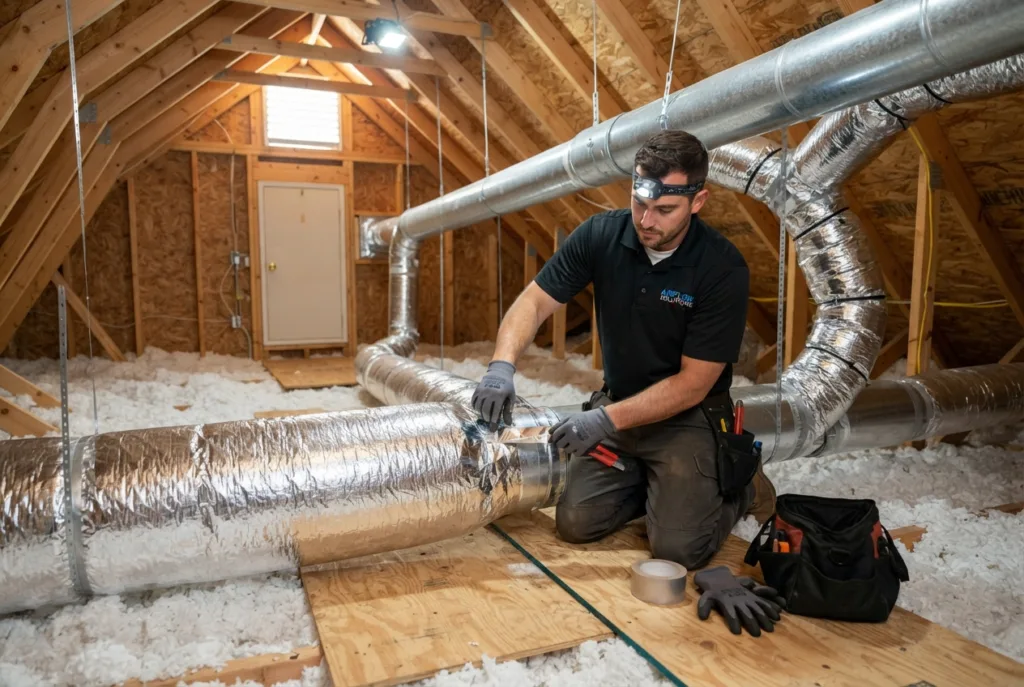
Warning Signs Your Duct System May Need Attention
Uneven Temperatures Between Rooms - ductwork warning sign

01

Uneven Temperatures Between Rooms

If some rooms in your Carlsbad home are consistently too warm while others stay cool, or vice versa, the duct system is often the cause — either through undersized supply branches, disconnected sections, or closed-off return pathways that starve certain areas of airflow.
High Energy Bills Despite Normal Usage - ductwork warning sign

02

High Energy Bills Despite Normal Usage

A leaky duct system forces your HVAC equipment to run longer to compensate for conditioned air that escapes into unconditioned spaces like attics or wall cavities. If your bills are rising without a clear reason, a duct leakage test can quantify how much conditioned air you're losing.
Excess Dust on Registers and Surfaces - ductwork warning sign

03

Excess Dust on Registers and Surfaces

Leaky return ducts pull unconditioned air — and the dust and debris it carries — directly into the airstream before it reaches the filter. If you notice unusual dust accumulation around supply vents or on furniture near registers, duct leakage may be bypassing your filtration system.
Weak or Noisy Airflow From Vents - ductwork warning sign
04

Weak or Noisy Airflow From Vents

Low airflow from vents can indicate crushed or kinked flex duct, disconnected sections, or undersized duct branches that restrict air movement. Whistling or rattling noises during system operation often point to loose duct connections, gaps in duct board, or air escaping through unsealed joints.
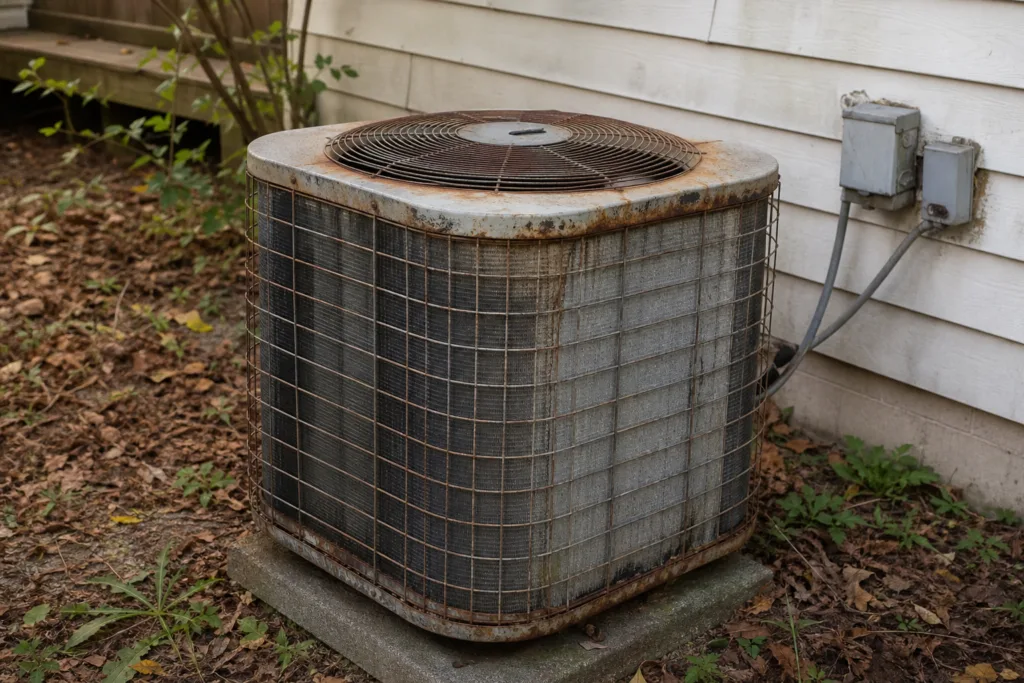
Musty or Stale Odors When the System Runs - ductwork warning sign
05

Musty or Stale Odors When the System Runs

Odors coming from vents when the HVAC system starts can indicate mold growth inside the duct system, often the result of condensation forming on poorly insulated ducts in attics or crawl spaces. This is a problem that requires professional inspection and remediation, not just a filter change.
HVAC System Cycling More Frequently Than Expected - ductwork warning sign
06

HVAC System Cycling More Frequently Than Expected

When significant duct leakage means conditioned air is lost before reaching the thermostat's location, the system may short-cycle because the thermostat reads a comfortable temperature while distant rooms remain uncomfortable. If your system cycles frequently but comfort is poor, duct performance is worth evaluating.
Professional ductwork team serving Carlsbad homeowners
The Benefits

What Professional Ductwork Delivers

💰

Improved Energy Efficiency Across All Seasons

Sealing and insulating ducts captures conditioned air that would otherwise be lost to unconditioned spaces, allowing your HVAC equipment to condition your living areas with less run time and lower electricity or gas consumption throughout the year.
🏠

More Consistent Comfort in Every Room

Properly designed and sealed ductwork delivers the right volume of conditioned air to each room as intended, eliminating the hot and cold zones that develop when air is lost to leaks or blocked by undersized branches.
🔧

Better Indoor Air Quality

Sealed ducts no longer pull contaminants from attics, crawl spaces, or wall cavities into your living areas. This means the air reaching your rooms has passed through your filtration system as designed, rather than picking up bypass contaminants along the way.
🌬️

Extended HVAC Equipment Life

When ducts are properly sealed and sized, your heating and cooling equipment operates within its design parameters instead of straining against excessive static pressure or running extended cycles to compensate for lost conditioned air. This reduces wear on the compressor, blower motor, and heat exchanger.
📈

Enables Zoning for Targeted Comfort Control

A well-configured duct system with properly installed dampers allows your home to be divided into independently controlled zones, so you can focus heating and cooling on occupied areas and reduce conditioning in unused rooms — a practical advantage for larger Carlsbad homes.
🤫

Supports Whole-Home Ventilation Standards

California's Title 24 building code includes ventilation requirements that specify minimum fresh-air exchange rates. A properly designed duct system can incorporate mechanical ventilation — bringing in filtered outdoor air — to meet these standards and maintain healthy indoor air.
Problems Solved

Common Ductwork Problems Professionals Fix

Your duct system is hidden behind walls and in attics, but problems with it affect every room in your home. Here are the most common issues our contractors address:

Duct Leaks and Disconnections

Studies show the average home loses 20-30% of conditioned air through duct leaks. Sealing and reconnecting ducts can dramatically improve comfort and reduce energy waste.

Undersized or Poorly Designed Ducts

Ducts that are too small or poorly routed restrict airflow, causing hot/cold spots and forcing your HVAC system to work harder than necessary.

Crushed or Kinked Flex Duct

Flexible duct that's been compressed, kinked, or improperly supported creates major airflow restrictions. Proper installation eliminates these hidden efficiency killers.

Missing or Damaged Insulation

Uninsulated ducts in attics can gain 20-30°F before reaching your rooms. Proper insulation ensures the air arriving at your registers is the temperature you expect.

Contamination and Air Quality Issues

Leaky return ducts can pull dust, insulation particles, and even mold spores from attics and crawl spaces into your breathing air. Sealing prevents this contamination.
Carlsbad family enjoying comfortable home after ductwork
Repair Guide

How to Choose the Right Ductwork Contractor

Ductwork is the hidden foundation of your HVAC system. The right contractor understands airflow science, not just sheet metal.

Key Factors to Consider

  • Duct Leakage Testing
    Quality contractors measure duct leakage with a duct blaster test before and after repairs to verify results.
  • Manual D Design
    For new ductwork, proper Manual D calculations ensure correct sizing for each room's heating and cooling needs.
  • Material Selection
    Sheet metal, flex duct, and duct board each have pros and cons. Your contractor should recommend based on your specific situation.
  • California Title 24 Compliance
    Duct work in California must meet specific sealing and insulation requirements. Ensure your contractor handles all code compliance.

Duct Sealing Methods Comparison

🔧 Manual Sealing (Mastic/Tape):

  • Lower upfront cost
  • Requires physical access to all ducts
  • Effective for accessible duct runs
  • Good for targeted repairs

🌬️ Aeroseal (Inside-Out Sealing):

  • Seals from inside the duct system
  • Reaches inaccessible connections
  • Verified results with before/after testing
  • Best for extensive leak issues

💡 Pro Tip

1. Request a duct leakage test before any work begins — it establishes a baseline 2. Don't use duct tape on ducts (ironically, it fails) — mastic or metal tape is proper 3. Insulation is as important as sealing — address both for maximum results 4. Ask about Aeroseal if your ducts are in walls or other inaccessible locations

Ready to Get Ductwork in Carlsbad?

Compare 3 quotes from pre-screened, licensed Ductwork contractors serving Carlsbad. It takes 2 minutes.
bbbgoogle_5startrustpilotgoogle_guaranteedyelp
ductwork contractor consulting with Carlsbad homeowner
Expert Advice

Ductwork Tips for Carlsbad Homeowners

1

Check for Obvious Problems First

Walk your attic or crawl space and look for disconnected ducts, crushed flex duct, or missing insulation. These visible problems are common and easy for a contractor to fix.
2

Address Ducts When Replacing HVAC Equipment

If you're replacing your AC or furnace, that's the ideal time to assess and improve your ductwork. New equipment on old, leaky ducts wastes 20-30% of capacity.
3

Room-by-Room Temperature Check

If some rooms are consistently 3+ degrees different from others, your duct system is likely the culprit. A professional assessment can pinpoint and fix the imbalance.
4

Consider Duct Zoning

Motorized dampers and zone controllers let you direct conditioned air where it's needed most. This is especially effective for two-story homes or rooms with different sun exposure.
Know Your Options

Seal vs. Replace: What Does Your Ductwork Need?

🔧 Seal and Repair If...

• Ducts are sheet metal and structurally sound • Leakage is moderate (less than 20%) • System is properly sized and designed • Budget is a primary concern
VS

✨ Consider Replacement If...

• Ducts are old flex duct that's deteriorating • Design is fundamentally wrong (undersized, poor routing) • Leakage exceeds 30% • You're remodeling or adding new HVAC equipment • Ducts have mold or vermin contamination

Complete Guide

The Complete Guide to Ductwork in Carlsbad

How Duct Systems Work: A Homeowner's Guide - ductwork guide

How Duct Systems Work: A Homeowner's Guide

A central HVAC duct system consists of two primary networks: supply ducts and return ducts. The supply side begins at the air handler or furnace, where a plenum (a central distribution box) feeds multiple branch ducts that run through the attic, walls, or floor framing to individual supply registers in each room. The return side collects room air through return grilles — typically fewer and larger than supply registers — and carries it back to the HVAC equipment to be filtered, conditioned, and recirculated.

The balance between supply and return airflow is one of the most important — and most often overlooked — aspects of duct design. Every room that receives supply air needs a clear path for that air to return to the system. In many homes, interior doors are the primary pathway for return airflow, which means closing bedroom doors can significantly increase pressure imbalances and reduce system performance. Proper duct design accounts for this by sizing returns appropriately and, in some cases, adding transfer grilles or jump ducts between rooms.

Duct materials vary: rigid sheet metal (galvanized steel or aluminum) is the most durable and easiest to seal; rigid fiberglass duct board offers some insulation value but is more prone to damage; flexible duct (flex duct) is widely used for branch runs because it's easier to install but must be properly supported and pulled taut to avoid flow-restricting kinks and sags.

Duct sizing is determined through a Manual D calculation, which uses the results of a Manual J load calculation to determine the required airflow to each room and then sizes each duct branch to deliver that airflow at the correct velocity. Velocity matters: ducts that are too small create excessive static pressure that strains the blower motor and creates noise; ducts that are too large slow airflow and can cause comfort problems. A contractor who skips the Manual D process and sizes ducts by guesswork or convention is cutting a corner that affects performance for the life of the system.

Duct leakage is measured in CFM (cubic feet per minute) at a standardized pressure using a duct blaster test. California's Title 24 code sets maximum allowable duct leakage rates for new construction and system replacements. Leakage-to-outside — air that escapes into unconditioned space — is the most problematic type because it represents conditioned air that's completely lost. Leakage between duct sections or at boot connections inside the conditioned envelope is less impactful but still reduces system efficiency.

Duct insulation is particularly important in Carlsbad homes where attic temperatures can reach extreme highs in summer. Uninsulated supply ducts running through a hot attic absorb heat before the air reaches the room, reducing cooling effectiveness and making the system work harder. California code requires minimum insulation values (R-8 or higher in most cases) for ducts in unconditioned spaces, and many contractors recommend exceeding the code minimum for ducts in hot attic environments.

Duct Sealing Methods: Aeroseal, Mastic, and Metal Tape

The three primary methods for sealing leaky ducts each have appropriate applications depending on the location and type of leakage. Mastic sealant is a paste-like compound that is brushed or hand-applied over duct joints, seams, and connections. It remains flexible after curing, bonds well to metal and fiberglass duct surfaces, and is the preferred method for accessible duct connections in attics, crawl spaces, and mechanical rooms. Properly applied mastic provides a durable seal that outlasts most tape alternatives.

Metal foil tape — not standard duct tape, which degrades quickly and is not code-compliant — is used for sealing connections at sheet metal joints and around registers and boots. When combined with mastic on larger joints, metal tape provides an additional layer of sealing on flat seams where the paste alone may not achieve full coverage. Standard gray cloth duct tape should never be used as a permanent duct seal; it loses adhesion over time, especially in hot attic environments.

Aeroseal is a pressurized sealant injection process where the duct system is pressurized from inside and a water-based sealant mist is pumped through the ducts. The sealant particles travel through the airstream and deposit only at leak points, sealing gaps from the inside. This method is particularly effective for leaks in inaccessible duct sections hidden inside walls or between floors. A computerized diagnostic reports the leakage reduction achieved, giving homeowners in Carlsbad documented proof of the improvement.
Duct Sealing Methods: Aeroseal, Mastic, and Metal  - ductwork guide
Duct Inspection First: A proper ductwork assessment includes pressure testing, visual inspection of accessible ducts, checking for leaks and disconnections, and evaluating airflow at each register. Most inspections take 1-2 hours and should happen before any work is quoted.
How to keep your duct system in top shape guide

How to Keep Your Duct System in Top Shape

Duct systems require less frequent maintenance than the HVAC equipment they serve, but periodic attention prevents small problems from becoming expensive failures. The most accessible maintenance task is keeping supply and return registers open and unobstructed — furniture placed over floor registers, or registers manually closed to redirect airflow, creates pressure imbalances that stress the blower and reduce comfort throughout the system.

Filter maintenance is directly connected to duct health. A heavily clogged filter increases resistance in the return side of the duct system, reducing airflow and causing the HVAC equipment to work harder. For homes with central systems, check the filter monthly and replace it on whatever schedule keeps it from becoming heavily loaded — typically every one to three months depending on household dust levels, pets, and filter type. A clean filter protects both the equipment and the ductwork interior from debris accumulation.

For older homes in Carlsbad, it's worth having the duct system professionally inspected every few years, particularly if the home has experienced water intrusion, rodent activity, or significant remodeling. Flex duct can develop tears or disconnected sections over time, and rigid duct connections can loosen as buildings settle. A visual inspection of accessible duct runs — typically in the attic, crawl space, or mechanical room — can identify problems before they worsen.

Change Filters Monthly: During peak cooling season, check your filter every 30 days. A dirty filter is the number one cause of AC problems. Annual Professional Tune-Up: Schedule maintenance in spring before summer demand hits. Technicians catch small issues before they become expensive repairs. Keep the Outdoor Unit Clean: In coastal areas, rinse salt residue off your outdoor condenser regularly to prevent corrosion.

Why Comparing Multiple Ductwork Quotes Matters

When comparing ductwork quotes, the scope of work is the most important item to clarify upfront. A quote for duct sealing should specify the method (mastic, tape, Aeroseal, or a combination), where the sealing will be applied, whether a before-and-after leakage test will be conducted, and what leakage reduction target the contractor is committing to. Vague quotes that simply offer to 'seal ducts' without measurement are difficult to evaluate and verify.

For new duct installation or replacement, ask whether the contractor will perform a Manual D calculation to determine duct sizing, or whether they're using the existing layout as-is. A properly engineered duct system tailored to your home's current layout and HVAC equipment will outperform a like-for-like swap of old ductwork. Confirm that the quoted materials meet California's insulation requirements and that all work will be permitted and inspected.

Warranty terms vary significantly between contractors. Some offer a one-year labor warranty on duct sealing or replacement; others provide longer coverage. Ask specifically about what happens if leakage returns or if a sealed connection fails within the warranty period. Comparing quotes with clearly defined scopes, materials, and warranties from multiple licensed contractors in Carlsbad gives you the information needed to make a confident decision rather than simply choosing the lowest number.

Why comparing multiple ductwork quotes matters guide

Price Transparency: Comparing quotes reveals the fair market rate for your specific repair. If one quote is dramatically different from the others, ask why. Different Diagnoses: Sometimes different technicians identify different root causes. Multiple perspectives help you make the best decision. Contractor Fit: Beyond price, compare warranties, response time, and communication quality to find the contractor you trust most.

Understanding Ductwork Service Costs - ductwork guide

Understanding Ductwork Service Costs

Ductwork costs vary widely depending on the type of service. Duct sealing projects are scoped based on system size, the volume and type of leakage, and the method used. Aeroseal tends to cost more than manual mastic sealing but may be the only option for inaccessible duct runs. Adding a leakage test before and after work is an additional line item but provides the only objective way to verify that the sealing actually reduced leakage to your satisfaction.

Full duct replacement costs depend on the home's square footage, the number of supply and return outlets, the duct material specified, and the complexity of routing new ductwork through existing framing. Attic installations are generally more straightforward than in-wall runs. Homes that require new penetrations through fire-rated assemblies or that have complicated floor plans may see higher labor costs due to the additional time and coordination involved.

For Carlsbad homeowners, it's worth asking whether any available utility or state programs cover partial costs of duct sealing. Some California utility companies offer rebates for duct sealing verified through a certified HERS (Home Energy Rating System) rater test, which can offset a portion of the project cost. An itemized quote from each contractor — showing labor, materials, testing, and permits separately — makes it straightforward to compare total project value rather than just the headline number.

Duct Sealing: Addresses leaks at joints and connections — the most common and cost-effective ductwork improvement. Duct Repair and Insulation: Fixes damaged sections and adds insulation to prevent energy loss in unconditioned spaces like attics and crawl spaces. Full Duct Replacement: Necessary when existing ducts are severely deteriorated, undersized for your system, or made of outdated materials.
Where We Serve

Ductwork Service Areas Near Carlsbad

We connect homeowners with licensed Ductwork contractors in Carlsbad and surrounding communities.
📍 Oceanside
📍 Vista
📍 Encinitas
📍 San Marcos
📍 Escondido
📍 Solana Beach
📍 Del Mar
📍 Leucadia
Common Questions

Ductwork FAQ — Carlsbad Homeowners

What causes duct leaks in the first place?

Duct leaks develop from several causes: factory connections and seams that were never properly sealed during original installation, joints that loosen as the building settles over time, flex duct that tears or separates at connection points, and animal or pest activity in attics or crawl spaces. In many homes, duct leakage was present from the day the system was installed because sealing was not standard practice in older construction eras.

How do I know if my ducts are leaking?

The most reliable way to quantify duct leakage is a duct blaster test, performed by a certified HVAC technician or energy auditor. This involves sealing all registers, pressurizing the duct system with a calibrated fan, and measuring how much air escapes. Signs that suggest leakage without formal testing include high energy bills, rooms that never reach the set temperature, and excess dust near supply registers.

Can I seal my own ducts, or does it require a professional?

Accessible duct connections in attics and mechanical rooms can sometimes be sealed by a capable homeowner using mastic sealant and the correct metal foil tape. However, leaks in inaccessible locations — inside walls, between floors, or in tight crawl spaces — require professional methods like Aeroseal. For work that will be submitted for utility rebates or verified by a HERS rater, professional installation and testing documentation is required.

What is Aeroseal and how is it different from traditional duct sealing?

Aeroseal is a patented process where the HVAC system is shut down, all registers are sealed, and a non-toxic sealant mist is injected into the pressurized duct system. The sealant particles travel through the airstream and deposit only at points where air is escaping, sealing gaps from the inside without requiring physical access to every duct section. A computerized system tracks leakage reduction in real time and provides a printed report at the end of the process.

Do I need permits for duct work in California?

In California, new duct installation and major duct replacement typically require a mechanical permit from your local building department, and in some jurisdictions an energy compliance report is also required. Duct sealing without structural changes may or may not require a permit depending on the municipality. Your contractor should advise you on permit requirements and should never recommend skipping permits to reduce costs, as unpermitted work can create problems when you sell the home.

What is duct zoning and how does it work?

Duct zoning divides a home into separate temperature control areas (zones) by installing motorized dampers inside the duct branches serving each zone, along with a zone control panel and individual thermostats for each area. When one zone calls for conditioning, its dampers open and others close or partially close to direct airflow where it's needed. Zoning requires a bypass damper or variable-speed equipment to handle the pressure changes that occur when some dampers are closed.

How long does a duct system typically last?

Rigid sheet metal ductwork can last 25 years or more when properly installed and maintained. Flexible duct typically has a lifespan of 15 to 25 years, though it degrades faster in extreme attic temperatures or if it was improperly installed with tight bends and unsupported sags. Fiberglass duct board generally lasts 15 to 20 years. Regardless of material, connections and seals are the first points to require attention as the system ages.

Why are some rooms in my home always hotter or colder than others?

Uneven temperatures between rooms are most commonly caused by duct system issues: undersized supply branches that can't deliver enough airflow, leaks that let conditioned air escape before reaching a room, poor return air pathways that create pressure imbalances, or registers that are partially blocked by furniture. The first step is having a contractor measure airflow at each register to identify which rooms are underserved.

What is a Manual D calculation and do I need one?

Manual D is the industry-standard engineering method for sizing residential duct systems. It uses the room-by-room airflow requirements from a Manual J load calculation and determines the correct duct diameter, length, and fitting types needed to deliver the right amount of air to each room at the correct velocity. California building code requires Manual D sizing for new duct systems. A contractor who sizes ducts by approximation rather than calculation is not following code.

Can duct problems affect indoor air quality?

Yes — significantly. Leaky return ducts draw air from unconditioned spaces like attics or crawl spaces directly into the HVAC airstream, bypassing the filter entirely. This can introduce attic dust, insulation particles, mold spores, and outdoor pollutants into your living areas. In Carlsbad, where wildfire smoke can accumulate in attic spaces, this pathway is a particularly important concern for household air quality.

What is duct insulation and why does it matter in California?

Duct insulation is a layer of fiberglass or foam material wrapped around or built into duct sections that run through unconditioned spaces. In a hot Southern California attic, uninsulated ducts can reach temperatures that significantly degrade the cooling effect of the air inside before it reaches the room. California's Title 24 energy code requires minimum R-8 insulation for ducts in unconditioned spaces, and many contractors recommend R-8 or higher for attic runs to maintain cooling effectiveness.

How do I compare duct sealing quotes from different contractors?

The most important factors to compare are: the sealing method proposed (mastic, metal tape, Aeroseal), whether a pre- and post-sealing leakage test is included to verify results, whether the quoted work will be performed in all accessible locations or only selected areas, and what warranty coverage applies. Ask each contractor to express their expected leakage reduction target as a percentage or CFM figure so you have a measurable outcome to hold them to.
More Services

Related HVAC Services in Carlsbad

Air Conditioning
Air Conditioning

Professional AC installation and system upgrades for year-round comfort.
AC Replacement

AC Replacement

Complete AC unit replacement with modern, high-efficiency systems.
HVAC Maintenance & Tune-Up

HVAC Maintenance & Tune-Up

Preventive maintenance to extend system life and reduce breakdowns.
Heating & Furnace Repair

Heating & Furnace Repair

Expert diagnosis and repair for all furnace and heating system issues.
Furnace Replacement

Furnace Replacement

Upgrade your heating system for better efficiency and lower energy bills.
Mini-Splits & Ductless

Mini-Splits & Ductless

Ductless solutions for room-by-room climate control without ductwork.
Heat Pumps

Heat Pumps

Energy-efficient heating and cooling in one versatile system.
Ductwork

Ductwork

Duct installation, repair, and sealing for optimal airflow efficiency.
Indoor Air Quality

Indoor Air Quality

Air purification, filtration, and ventilation for healthier indoor living.

Ready for Ductwork in Carlsbad?

Get 3 competitive quotes from licensed, pre-screened Ductwork contractors serving Carlsbad. Free, fast, and zero obligation.