A low installation quote can get expensive when permit fees, testing, and electrical work appear after you sign. Before buying equipment, confirm how Oceanside HVAC permits apply to your project and who will handle the approval process.
Your contractor should explain the full installed cost, including required inspections and energy-code documentation. A replacement, first-time installation, and heat pump conversion can involve different paperwork.
Start by defining the work, then confirm the permit path before scheduling installation.
Key Takeaways Before You Sign
- Oceanside HVAC permits include residential air conditioner and furnace replacements among the city’s electronic permit categories.
- California’s 2025 Energy Code took effect January 1, 2026, and applies to permit applications submitted on or after that date.
- Get permit responsibilities, required testing, electrical work, and final inspection arrangements in writing.
A contractor’s installation date doesn’t determine when the permit will be approved or when the project will receive final sign-off.
Which Oceanside HVAC Permits Fit Your Project?
Residential equipment replacements
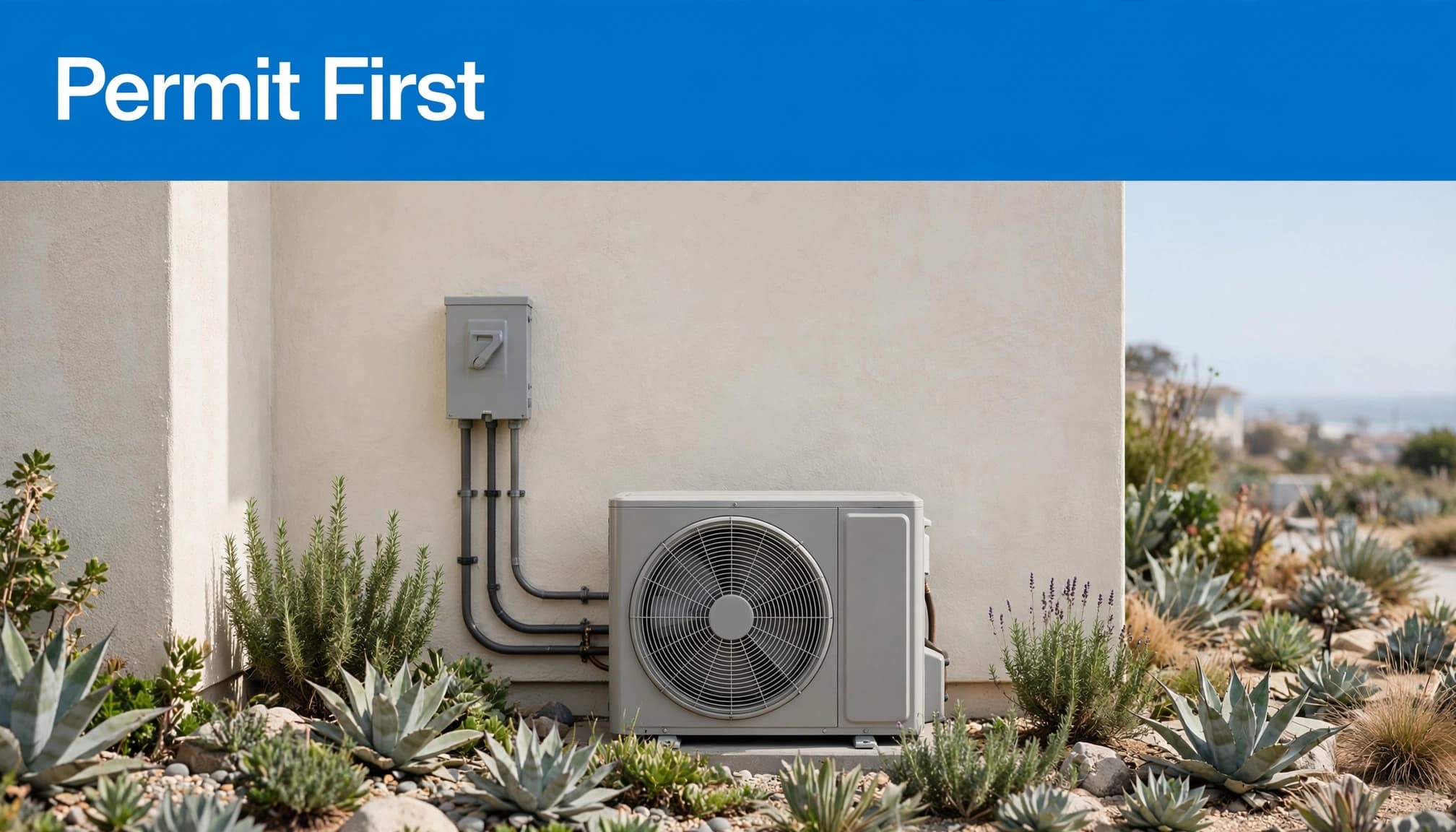
The City’s published permit application guidance lists “Residential A/C replacement” and “Residential Furnace Replacement” as eTRAKiT permit types. These categories give homeowners a starting point for discussing a replacement with their installer.
A listed replacement category doesn’t establish the requirements for every project. Moving equipment, replacing ducts, changing fuel sources, or adding electrical work may affect the permit path.
Ask your contractor to identify the proposed permit category, then confirm it with Oceanside’s Building Division.
First-time installations and conversions
For a new air conditioner, ductless mini-split, or furnace-to-heat-pump conversion, describe the full installation before asking about permits. Include equipment locations, duct changes, electrical circuits, and any gas or venting work.
Don’t assume a replacement application covers a first-time installation. Relocations, duct changes, fuel conversions, and related electrical work may follow a different permit path. Confirm current requirements with the City. Routine AC repair may also differ from equipment replacement.
Give the City a clear description rather than asking whether “HVAC work” needs approval. If a permit is required, wait for it to be issued before installation begins.
Prepare the Application Before Installation Day
Who can apply?
Oceanside accepts permit applications from property owners, licensed contractors, and authorized agents. Permits are issued to appropriately licensed California contractors or qualifying owner-builders.
The City’s published guidance lists a 12-month ownership requirement for residential owner-builders. If you’re considering that route, confirm your eligibility directly before submitting an application.
Contractors need to provide a state license number, City Business License, and current workers’ compensation certificate. Ask who will submit the application and whose name will appear on the permit.
For a contractor-led installation, the written agreement should specify who handles application corrections, inspections, and permit closeout.
What belongs in the submission?
Oceanside requires a project valuation, and plans may also be necessary. Applications that include plans must follow the City’s electronic submission process.
The City’s guidance for Oceanside building permits directs applicants to the electronic Oceanside building permit instructions for the Building Permit Application or eTRAKiT. Submitted documents must be PDFs that meet the City’s formatting requirements.
Ask your contractor to prepare a consistent project description. Equipment model numbers, installation locations, electrical changes, ductwork, and energy-compliance documents should describe the same proposed system.
Also confirm whether an electrical panel upgrade or other related work needs separate documentation or approval. Missing scope details can lead to corrections after submission.
Keep a copy of the application and issued permit. A submission receipt confirms the application was received, not approved.
Title 24 Compliance and HVAC Testing in 2026
Which energy code applies?
The California Energy Commission’s 2025 Building Energy Efficiency Standards took effect January 1, 2026. These energy efficiency standards apply to permit applications submitted on or after that date under the California Energy Code.
Title 24 compliance involves more than choosing an efficient unit. Depending on the work, documentation and verification may cover airflow, fan energy use, refrigerant charge, and duct leakage testing where required.
For new HVAC systems in existing buildings, CEC guidance identifies fan airflow and watt-draw testing. Other checks depend on the system, project scope, climate zone, and applicable exceptions.
Ask which compliance forms and tests your specific installation needs. A full building energy report for new construction isn’t automatically the right paperwork for a standalone replacement.
HERS terminology has changed
Homeowners may still hear the term “HERS verification testing,” but the CEC’s current HERS program guidance explains an important change. Starting January 1, 2026, field verification for Energy Code compliance operates under the Energy Code Compliance framework, with ECC-Raters.
Testing hasn’t disappeared. The terminology and compliance framework have changed.
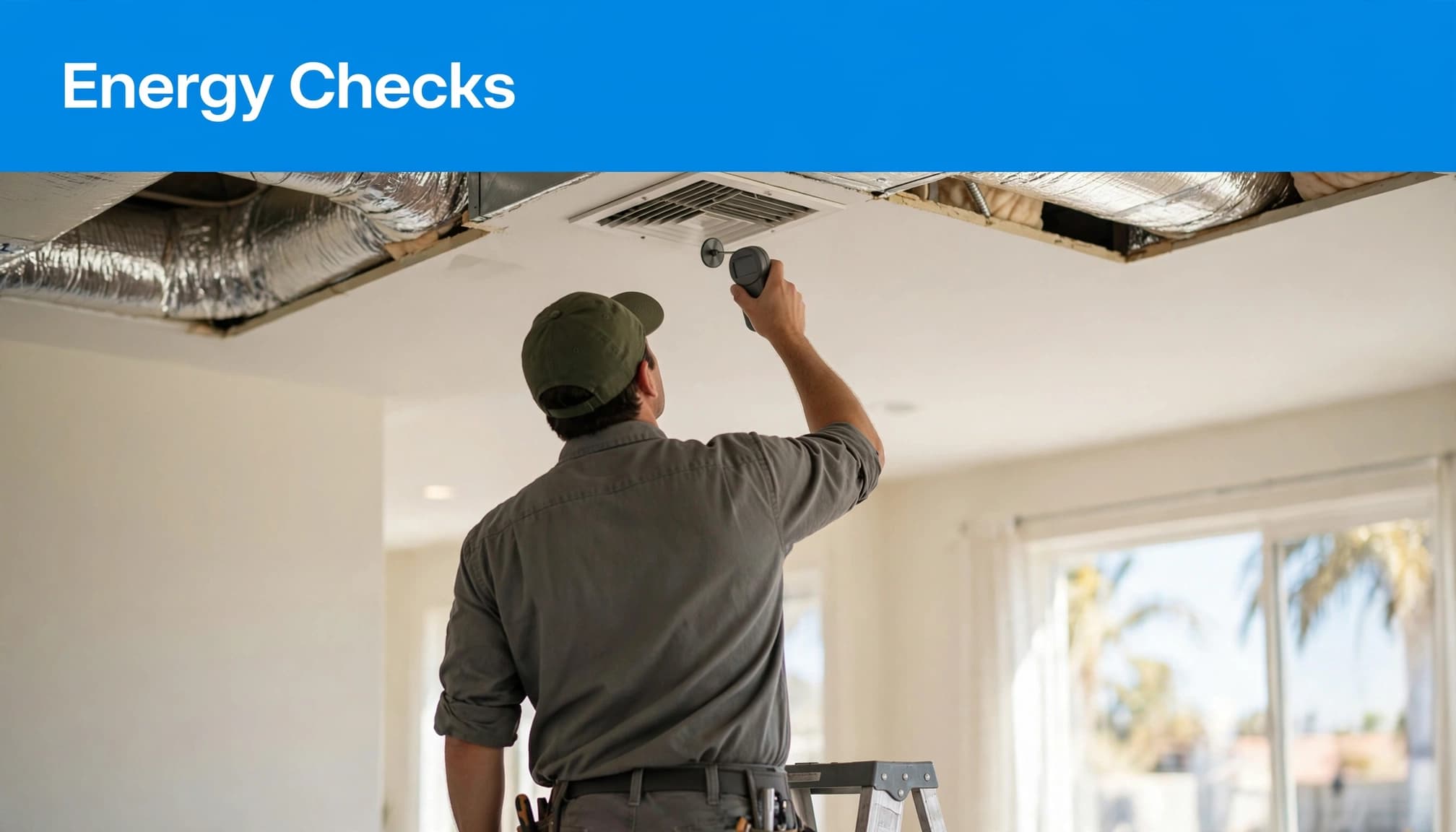
Your contractor should identify the required verifier, arrange testing, and explain who pays for corrections or retesting.
A system that heats and cools successfully can still need corrections before it passes required energy-code verification.
Define the Scope for Your Oceanside Home
Permit preparation starts with an accurate installation plan that reflects the proposed HVAC work, including any mechanical system upgrades. Equipment changes later can affect documentation and cost.
Near the coast, ask about corrosion protection for the outdoor coil and cabinet. Inland neighborhoods such as Rancho Del Oro generally have different cooling demands than marine-cooled homes near the beach.
Request a heating and cooling load calculation rather than automatically matching the old unit’s capacity. The assessment should consider windows, insulation, sun exposure, and existing ducts.
For a heat pump conversion, check electrical panel capacity before accepting a price. For a furnace replacement, clarify venting and condensate work. If ducts need replacement or substantial changes, include that work in the scope presented to the City.
Ductless equipment also deserves consideration in older homes without usable ducts. However, eliminating ductwork doesn’t answer the electrical or permit questions.
For coastal properties or visible exterior changes, ask whether Planning needs to review the proposed equipment location.
Permit Fees and Timing: Compare the Right Numbers
Oceanside HVAC permits shouldn’t be priced using figures for an entire accessory dwelling unit or major building addition. Those projects involve broader reviews and different fee calculations.
The City’s published guidance says plan-check and permit fees may apply. It doesn’t establish one universal HVAC permit price or a standard processing time for every installation.
Ask your contractor to separate municipal charges from the company’s permit-handling fee. Energy documentation, independent verification, and retesting may also appear as separate costs.
A complete quote should explain whether those charges are fixed, estimated, or excluded. If an allowance appears, ask what happens when the actual charge exceeds it.
Also, distinguish installation time from approval time. A contractor’s estimate for completing the physical work doesn’t include every possible application correction or inspection delay.
Before committing to a date, ask the City, “What is the permit review timeline for this project, and what plan check timeline applies?” Also confirm whether the application is complete and when inspections can be scheduled. These steps can affect the schedule for physical installation.
Inspections and Final Permit Closeout
Once the permit is issued, your contractor should confirm which inspections apply and when to request them. Don’t cover work that requires inspection until it’s approved.
Oceanside’s inspection scheduling instructions allow requests through eTRAKiT, the inspection request form, or voicemail at 760-435-3925.
Requests received by 3:30 p.m. on a business day are scheduled for the next business day. Later requests move to the two-business-day schedule. These are inspection scheduling rules, not permit application review timelines.
Ask who’ll meet the inspector and provide access to the equipment. If corrections are required, your agreement should explain who completes them and schedules the return visit.
At handover, collect the permit number, final approval record, applicable energy-compliance documents, equipment model numbers, and warranty information.
Keep these records with your home maintenance files. They document the approved work and help future technicians identify the installed system.
Equipment startup and permit closeout are separate milestones. Confirm both before considering the project finished.
Compare Quotes With Permit Costs Included
A lower price means little if it leaves out work that another contractor included. Compare equipment capacity, efficiency ratings, warranties, and installation scope before comparing totals.
Through 3HVACQuotes’ Oceanside HVAC services, homeowners can connect with up to three licensed, insured, pre-screened local professionals. The matching service is free and carries no obligation.
Ask each contractor for an itemized proposal covering the same project. Include permit handling, applicable energy documentation and testing, electrical work, duct repairs, old-equipment removal, and refrigerant recovery.
If you’re replacing both heating and cooling equipment, request a heat pump option alongside the proposed furnace-and-AC system. Then compare the installed cost and required electrical changes.
Near the water, compare corrosion protection as well. A quote that includes protective equipment features offers a different scope than one that doesn’t.
Finally, identify who pays when testing reveals duct leakage or another installation problem. That responsibility should be clear before work starts.
Frequently Asked Questions About HVAC Permits
Does replacing an AC unit use a different process than a new installation?
Oceanside lists residential A/C replacement as an electronic permit category. A first-time installation, equipment relocation, or conversion can involve additional scope. Have the Building Division confirm the correct application route before scheduling work.
Does every project need the same energy testing?
No. Required checks depend on the equipment, work performed, and applicable code provisions. Ducted systems and ductless systems don’t have identical verification needs. Ask for the project’s required forms and tests in writing, including the qualified rater when field verification applies.
Should I pull the permit myself?
Owner-builder permitting carries responsibilities and eligibility requirements. Confirm those with the City before choosing that route. When hiring an installer, a written agreement assigning permit handling and inspection coordination to the contractor keeps responsibility clear.
Start With a Complete, Permit-Ready Quote
Oceanside HVAC permits belong in the planning stage, before equipment arrives or installation begins. A clear scope lets your contractor confirm the application path and applicable energy requirements.
Compare complete installed prices, including approval, testing, and closeout responsibilities. The useful quote is the one that explains how the project reaches final sign-off without surprise additions.