
Heating & Furnace Repair in Clovis, CA
Unlike coastal California, Clovis gets genuine winter. Tule fog settles for days and overnight temperatures drop below freezing, so a furnace here is real equipment doing real work. Compare three heating repair quotes from licensed local technicians.
Or call us: 760-223-7267
✅ Licensed & Pre-Screened Contractors
💰 Best Price Guarantee
⚡ Fast & Free — No Obligation
📊 Transparent Pricing Comparison
🏠 Local Experts Who Know Your Area
🕐 Same-Day Quotes Available

AI Matched Contractors
Our technology helps match you with trusted, top-rated HVAC pros so you can compare price, service, equipment, and warranty.
Get Your Free Quote Now
Same-Day
Same-Day Available
Fast
Fast Winter Service
Up to
Up to 30% Savings
100%
100% Licensed
3
3 Free Quotes
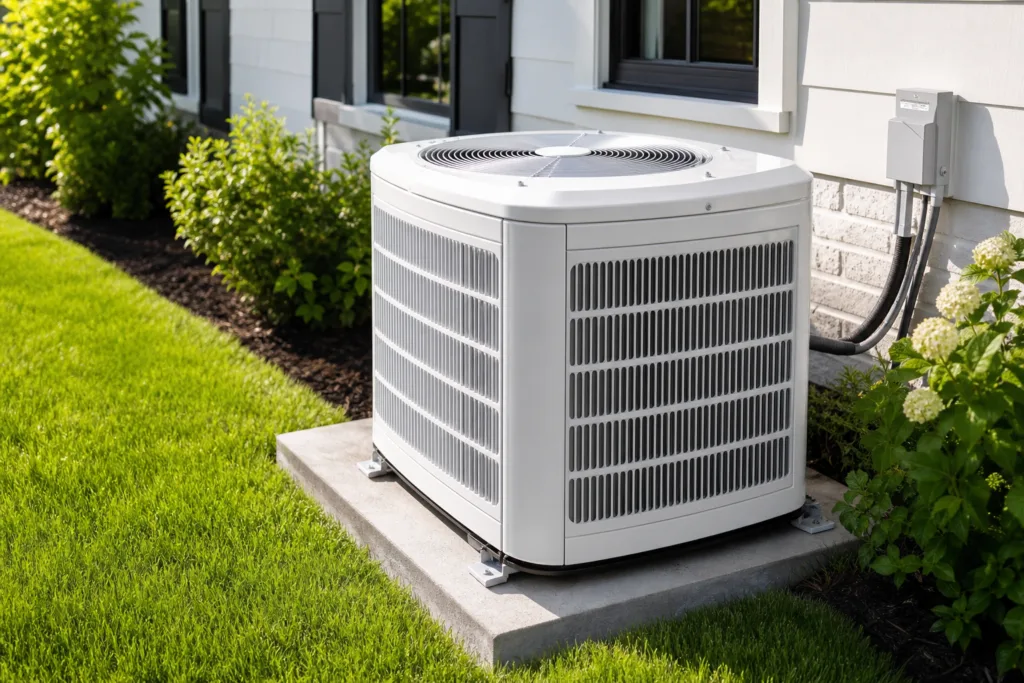
Understanding Heating & Furnace Repair
Winter Is Actually Cold in the Central Valley
Homeowners moving from the coast are often surprised by a Clovis winter. Tule fog can hold the valley floor at low temperatures for days without lifting, and clear nights bring frost. Furnaces here accumulate meaningful runtime between December and February rather than switching on occasionally.
Failed igniters and flame sensors after heavy seasonal use • Cracked heat exchangers on older units • Blower motors worn from combined heating and cooling duty • Thermostat and control board faults • Flue and venting problems • Gas valve and pressure issues
That changes the failure pattern. A coastal furnace often fails from disuse and corrosion; a Clovis furnace wears out from operation. It also means a no-heat call in January is urgent, particularly during a fog event when daytime temperatures never recover.
Why Act Fast
Signs Your Furnace Needs Repair
Won't turn on
The Furnace Runs but the House Stays Cold
Blowing cold air
You Smell Gas or a Burning Odor When Heat Starts
Short cycling
The System Short-Cycles On and Off Repeatedly
Strange smells
You Hear Booming or Rumbling at Ignition
Loud noises
The Carbon Monoxide Alarm Has Sounded
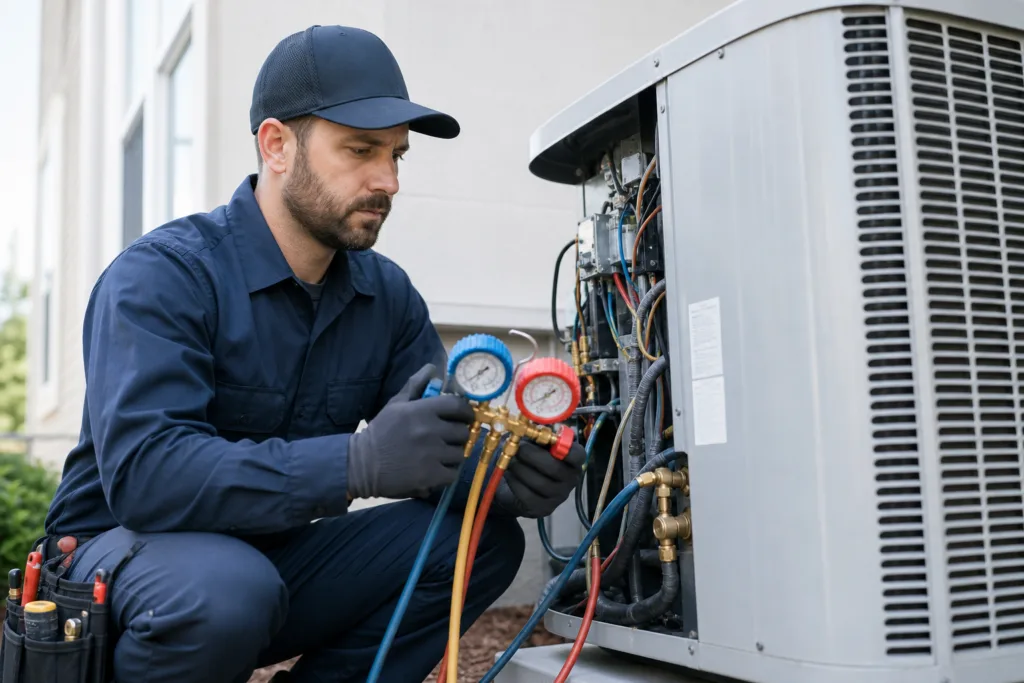
Safety Comes Before Price on Gas Equipment
Heating repair involves combustion, and that raises the stakes above a cooling repair. A competent diagnosis includes inspecting the heat exchanger for cracks and verifying the furnace is burning safely, not merely confirming it produces heat. If you smell gas or a carbon monoxide alarm has sounded, leave the house and call the gas utility before scheduling any contractor.
Key Details
Common Furnace Repairs & What Affects Price
What a proper Clovis heating diagnosis includes
01
Igniter/flame sensor
Heat exchanger inspected for cracks, with findings reported
02
Blower motor
Combustion analyzed to confirm the furnace burns safely
03
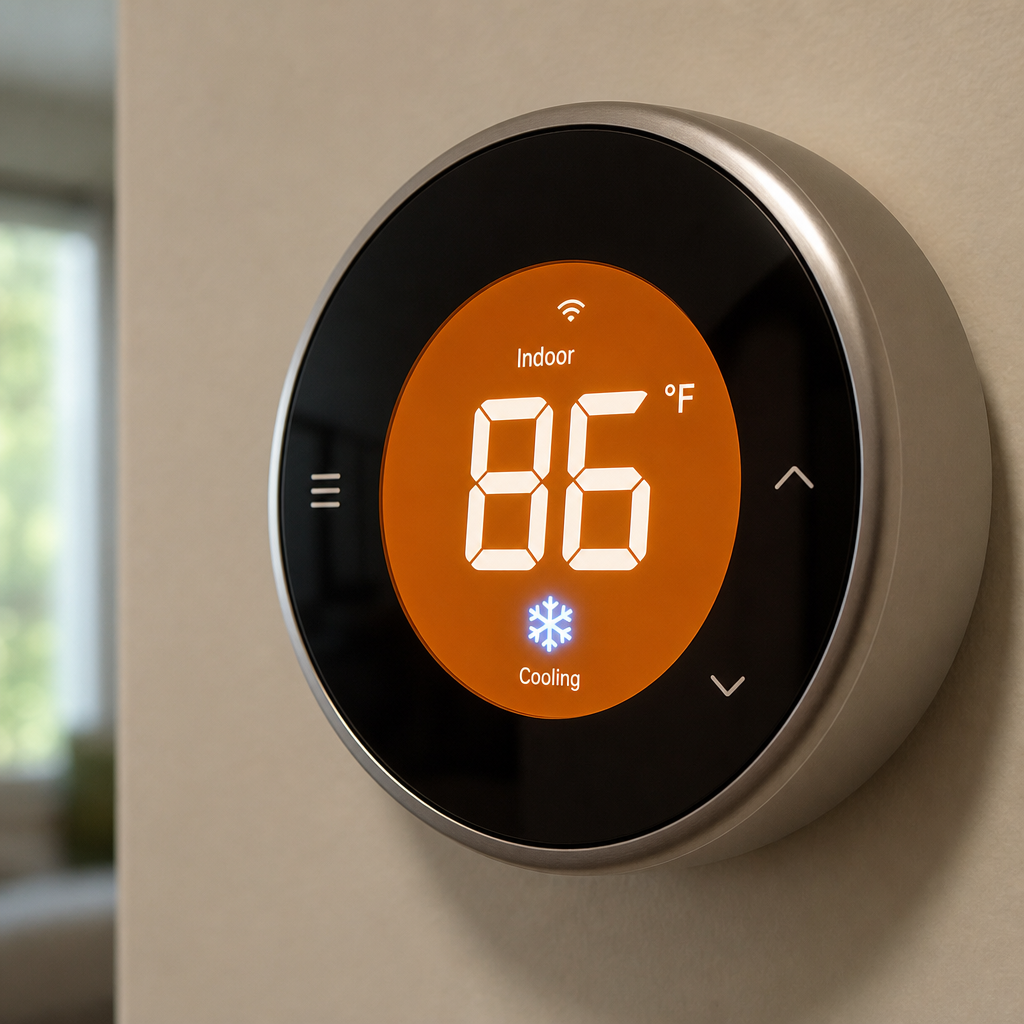
Control board
Gas pressure verified against manufacturer specification

04
Thermostat
Flue and venting checked for obstruction and corrosion
05
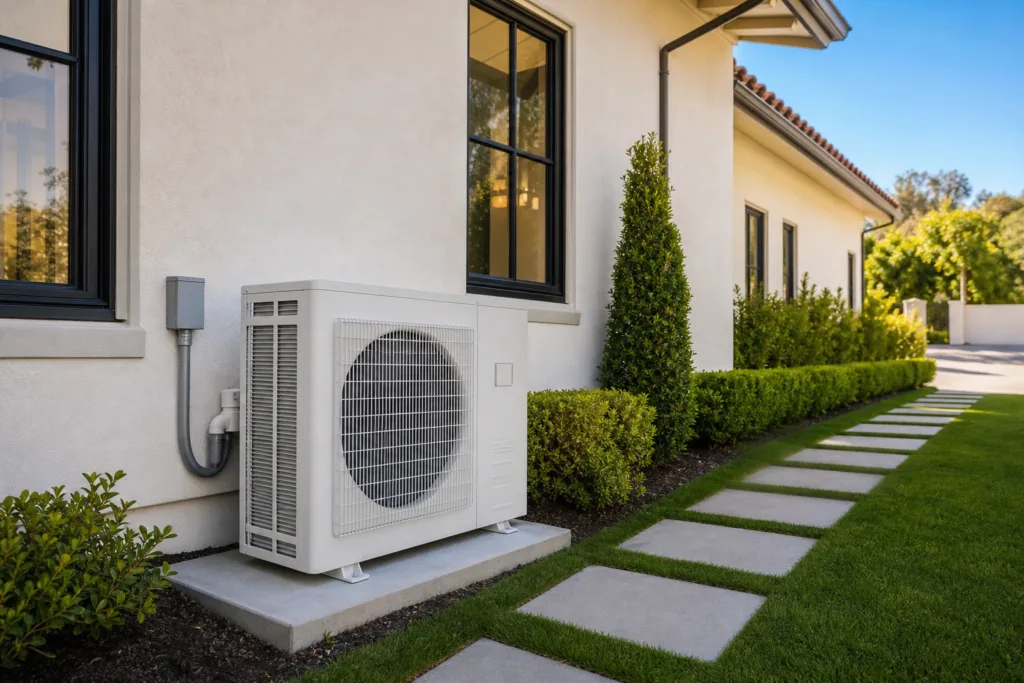
Gas valve
Safety controls and limit switches tested rather than bypassed
06
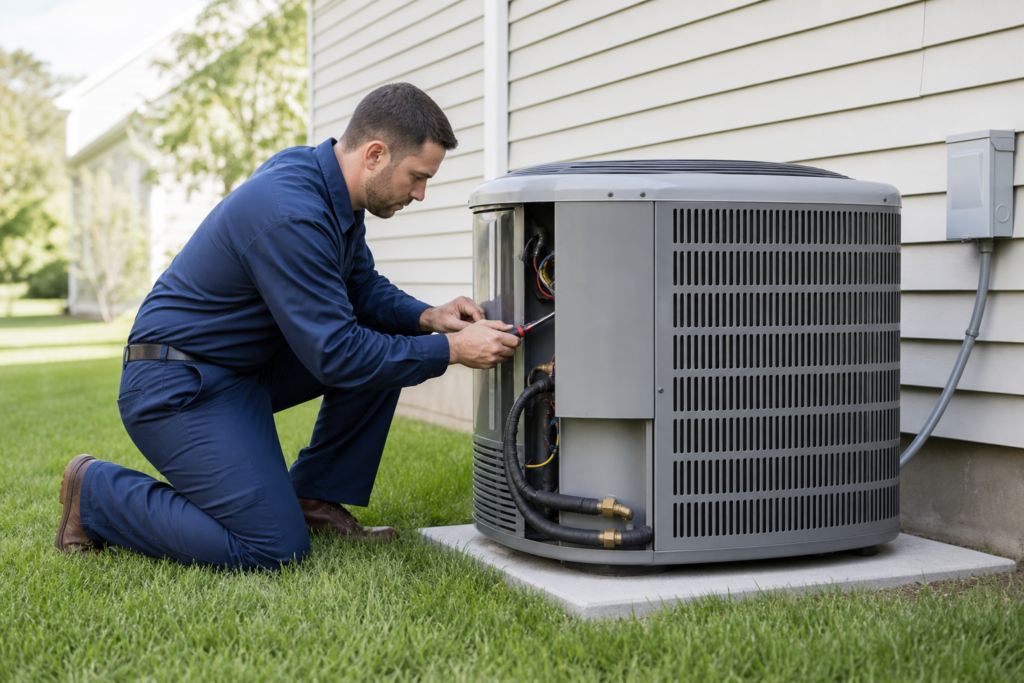
Heat exchanger
Written findings naming the failed part, cause and warranty
The Process
What to Expect From a Furnace Repair Visit
💰
Safety-first diagnosis
Licensed Technicians for Gas Equipment
🏠
Clear quote
Heat Exchanger Inspection Included
🔧
The repair
Combustion Testing, Not Just a Function Check
🌬️
Safety verification
Same-Day Response During Cold Snaps
📈
Compare Quotes
Written Warranty on Parts and Labor
🤫
Peace of Mind
Three Competing Quotes to Compare
Choosing Right
How to Choose a Heating Contractor in Clovis
What matters when the equipment burns gas
Key Factors to Consider
- Verified Licensing
Heating work involves gas and combustion. Confirm an active California C-20 license and current insurance before anyone opens the equipment. - Heat Exchanger Inspected
This governs the whole repair-or-replace decision. Ask whether it was inspected and what was found, and expect a clear answer. - Combustion Tested
A technician with an analyzer can confirm the furnace is burning safely rather than merely producing heat. Ask for the readings. - No Bypassed Safety Controls
If a repair involves defeating a limit switch or safety control to keep the furnace running, decline it and get another opinion.
Repair vs. Replace Decision Guide
🔧 Repair If:
- Igniter or flame sensor failure
- Blower or capacitor fault
- Thermostat or control board
- Heat exchanger intact
🔄 Replace If:
- Cracked heat exchanger
- 20+ years, repeated faults
- Corroded flue or burners
- Replacing the AC anyway
💡 Pro Tip
1. Confirm the heat exchanger was inspected and ask what was found
2. Ask whether combustion was tested with an analyzer, not just observed
3. Never accept a bypassed safety control as a repair — those exist for a reason
4. Be cautious of replacement advice on a furnace with low runtime and no exchanger fault
Repair or Replace a Clovis Furnace
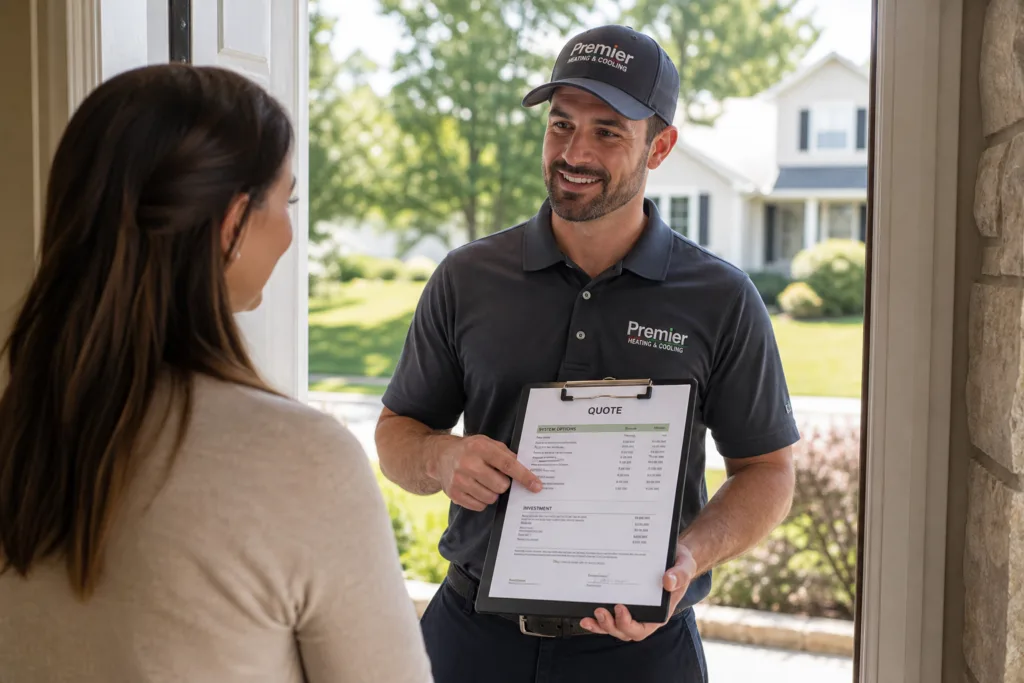
A cracked heat exchanger effectively ends a furnace's life, because it is a carbon monoxide risk and rarely economical to replace. Short of that, most heating faults are repairable parts. Because Clovis furnaces do accumulate real seasonal runtime, age matters more than it would on the coast, so on a unit past twenty years with repeated faults it is worth pricing replacement alongside the repair.





Expert Advice
What Clovis Homeowners Say
1
Heat Restored During a Fog Week
Our furnace quit during a fog week when it never got above the forties. Comparing quotes was how we found someone who could come the same day.
2
The Heat Exchanger Was Fine
One contractor recommended full replacement. The second inspected the heat exchanger, found it sound, and replaced a flame sensor instead.
3
They Showed Me the Combustion Readings
The technician showed me the combustion readings. Nobody had ever done that before and it explained the odor we had noticed.
4
Delayed Ignition, Not Normal
We were told the booming at startup was normal. The third opinion identified delayed ignition, which was a genuine safety issue.
Know Your Options
When to Repair vs. When to Replace
🔧 Repair Makes Sense If...
• Igniter, flame sensor or thermocouple failure
• Blower motor or capacitor fault
• Thermostat or control board issue
• Heat exchanger confirmed intact
VS
✨ Consider Replacement If...
• Cracked or corroded heat exchanger
• 20+ years with repeated seasonal faults
• Corroded flue or burner assembly
• You are replacing the air conditioner anyway
Complete Guide
Complete Guide to Heating Repair in Clovis
Why Tule Fog Changes the Heating Equation
Tule fog is the defining feature of a Central Valley winter and it is poorly understood by anyone who has not lived through one. Cold, saturated air settles on the valley floor and can persist for days, with temperatures that never meaningfully recover during daylight.
For a heating system that means sustained operation rather than brief morning cycles. A furnace that would idle through a coastal winter runs for hours at a stretch here, and components accumulate wear accordingly.
It also raises the urgency of a failure. Losing heat during a multi-day fog event is not a matter of putting on a sweater, particularly in a household with older residents or young children. When you call for service, say how cold the house has become — that information legitimately affects triage.
The Heat Exchanger Question
The heat exchanger separates combustion gases from the air circulating through your home. When it cracks, carbon monoxide can enter that airstream, which is why its condition governs the entire repair-or-replace decision.
Any competent no-heat diagnosis includes inspecting it. Ask directly whether it was inspected and what was found. A technician who has not looked has not completed the diagnosis, regardless of what else was tested.
If a crack is found, replacement of the furnace is almost always the recommendation, because exchanger replacement is expensive and usually uneconomical on an older unit. If the exchanger is sound, most other faults — igniters, flame sensors, blower motors, control boards — are ordinary repairs, and a recommendation to replace the whole system deserves a second opinion.
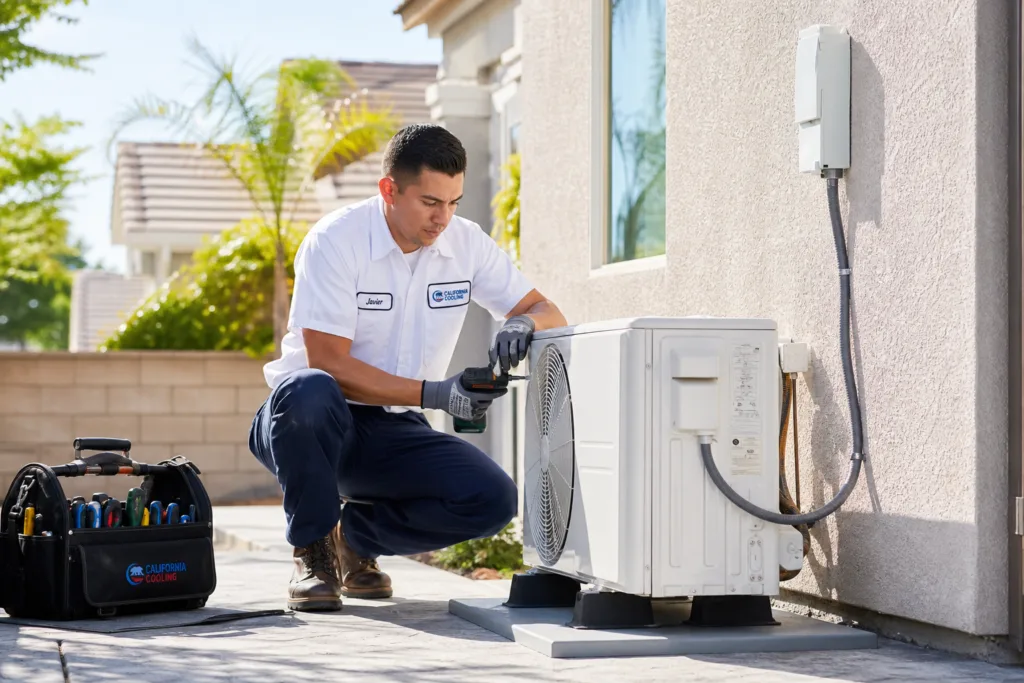
How to Read a Heating Repair Quote
A heating quote should separate the failed part, the labor and the warranty, and it should name what caused the failure.
Some causes are simply wear: igniters and flame sensors are consumable and fail after enough cycles. Others point to something upstream. A blower motor that has failed early may indicate restricted airflow from a clogged filter or undersized return duct, and replacing the motor without correcting airflow invites a repeat.
Be cautious of two patterns. The first is a replacement recommendation with no heat exchanger inspection documented. The second is any repair that involves bypassing a safety control or limit switch to keep the furnace running. Those controls shut the equipment down for a reason, and defeating one converts a repairable fault into a hazard.
Carbon Monoxide and When to Leave

Gas-fired heating carries a carbon monoxide risk that cooling equipment does not, and the correct response to warning signs is straightforward.
If a carbon monoxide alarm sounds, or you experience headaches, nausea or dizziness that improve when you leave the house, get everyone outside and call the gas utility or emergency services before contacting a contractor. The same applies to a gas smell: leave first, call from outside, do not operate switches.
Every Clovis home with gas heating should have working carbon monoxide alarms, tested annually and placed near sleeping areas. Visible warning signs on the equipment itself include soot around the burner area, a yellow rather than blue flame, and a persistent acrid odor when the heat runs. Any of these warrants a service call before further use.
Getting Through a Valley Cold Snap
Furnace failures cluster on the first genuinely cold night of the season, for the same reason air conditioners fail in the first heat wave: it is the first full-load test after months of inactivity.
The practical defence is an autumn check. Having a technician verify ignition, gas pressure, safety controls and the heat exchanger in October costs the same as in January but arrives without the queue and without the cold house. It is the heating equivalent of the spring cooling visit, and in a climate with both extremes it is worth doing both.
If your furnace is over twenty years old, use that autumn visit to ask a direct question: is this unit likely to get through another winter? A planned replacement in mild weather is cheaper and less disruptive than an emergency replacement during a fog week.
Where We Serve
Furnace Repair for Clovis Homes
Clovis neighborhoods and nearby Fresno County communities we cover
📍 Old Town Clovis
📍 Harlan Ranch
📍 Loma Vista
📍 Tarpey Village
📍 Fort Washington
📍 Woodward Park
📍 Clovis
📍 Sanger
Common Questions
Heating & Furnace Repair FAQ — Clovis Homeowners
How fast can I get furnace repair in Clovis?
Most Clovis heating repairs are completed in one visit when the part is stocked. Igniters, flame sensors and capacitors are common and usually on the truck; control boards and gas valves may need ordering. During a cold snap or fog event scheduling is the constraint rather than repair time, which is why comparing three contractors for availability is worthwhile.
Do Clovis furnaces really get much use?
Yes, and more so than many expect. Clovis winters include genuine freezing nights and multi-day Tule fog when daytime temperatures never recover. A furnace here accumulates real seasonal runtime, so heating failures are both more likely and more urgent than in coastal California.
Why compare three heating repair quotes?
Leave the house first. If a carbon monoxide alarm sounds or you smell gas, get everyone outside and call the gas utility or emergency services before contacting an HVAC contractor. Do not operate light switches or appliances. Only schedule a technician once the immediate hazard has been assessed by the utility.
How do I know if my heat exchanger is cracked?
You cannot reliably determine it yourself; it requires inspection by a technician, sometimes with a camera. Warning signs that warrant a call include soot around the burner area, a yellow rather than blue flame, an acrid smell when heat runs, or carbon monoxide alarm activity. Always ask explicitly whether the exchanger was inspected during a no-heat diagnosis.
My furnace makes a booming sound when it starts. Is that normal?
No. A boom or rumble at ignition usually indicates delayed ignition, where gas accumulates briefly before lighting. It is a safety issue rather than a quirk and should be diagnosed promptly. If a contractor tells you it is normal without inspecting the burners and gas pressure, get a second opinion.
What should I ask about a furnace repair?
Ask what was measured: gas pressure against specification, combustion readings, temperature rise across the heat exchanger, and the condition of safety controls. A technician who provides those figures has diagnosed the system. A verbal confirmation that it is working now does not tell you whether it is burning safely.
Is it worth repairing a 20-year-old furnace in Clovis?
It depends almost entirely on the heat exchanger. If it is sound and the fault is an igniter, sensor or blower component, repair is usually sensible even at twenty years. If the exchanger is cracked, replacement is the practical answer. Given local runtime, also ask for replacement pricing if the unit has needed repairs in consecutive winters.
Is furnace repair work guaranteed?
Repairs should carry a written warranty on parts and labor. Ask for the term explicitly and confirm what happens if the same component fails again within it. On gas equipment also confirm the technician's license number appears on the invoice, which matters for both warranty and insurance purposes.
Should I replace my furnace with a heat pump instead?
It is worth pricing, because Clovis needs both heating and heavy cooling and a heat pump provides both from one system. The consideration is that local winters include genuine freezing nights, so sizing and any backup heat need proper attention. Ask for a heat pump option quoted alongside a like-for-like furnace replacement and compare total cost of ownership.
When should I have my furnace checked?
Schedule a check in autumn, before the first cold snap. Furnaces fail on the first full-load night after months of inactivity, exactly as air conditioners fail in the first heat wave. An October visit verifies ignition, gas pressure, safety controls and the heat exchanger while contractors still have availability.
Why does my furnace keep turning on and off?
Short-cycling — repeatedly starting and stopping — commonly indicates a restricted filter, a failing flame sensor, or an oversized furnace. It is worth diagnosing because each cycle causes wear and the underlying cause may be a safety control doing its job. Start by checking the filter, then have gas pressure and the sensor tested.
Do I need carbon monoxide alarms with gas heating?
Yes. Every Clovis home with gas heating should have working carbon monoxide alarms near sleeping areas, tested annually with batteries replaced on schedule. Given that local furnaces run substantially more than coastal ones, this is basic protection rather than an optional precaution, and it costs very little.
More Services
Related HVAC Services in Clovis
AC Repair
Fast, reliable AC repair for Clovis homes — diagnose and fix cooling issues.
Air Conditioning
Professional AC installation and system upgrades for year-round comfort.
AC Replacement
Complete AC unit replacement with modern, high-efficiency systems.
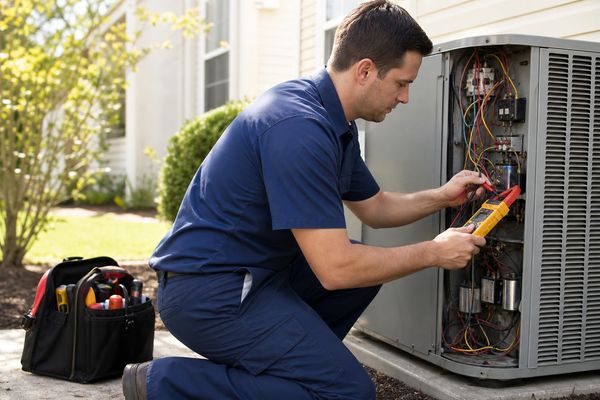
HVAC Maintenance & Tune-Up
Preventive maintenance to extend system life and reduce breakdowns.
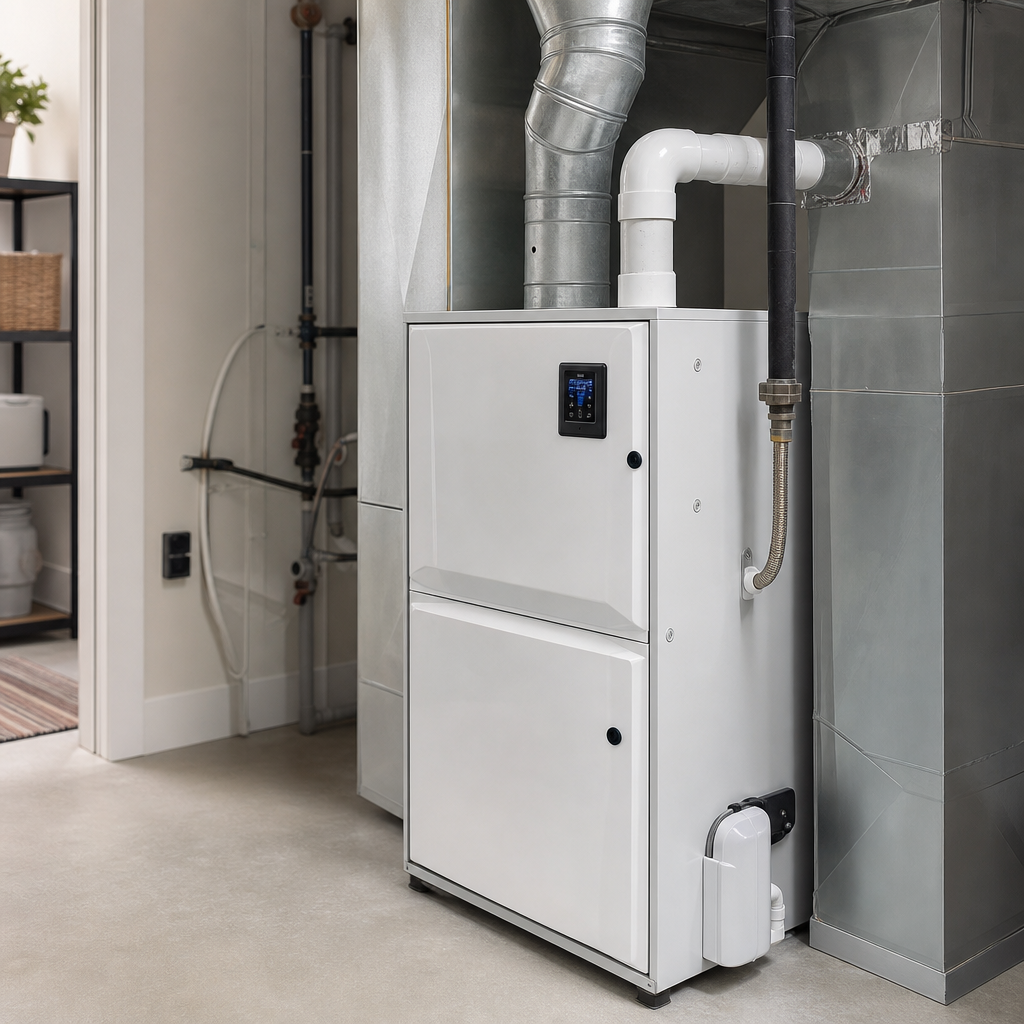
Furnace Replacement
Upgrade your heating system for better efficiency and lower energy bills.
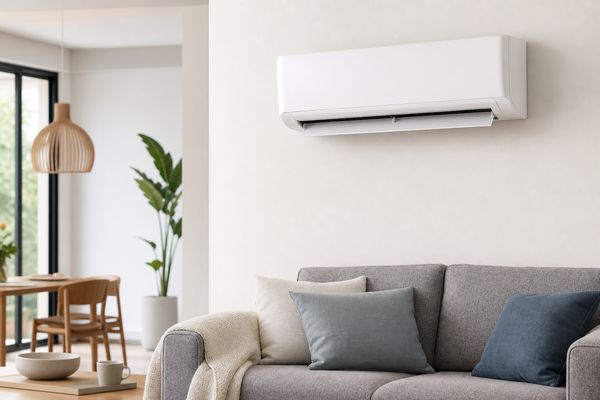
Mini-Splits & Ductless
Ductless solutions for room-by-room climate control without ductwork.
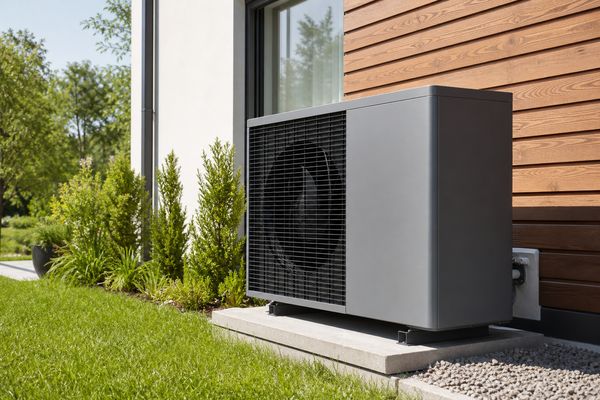
Heat Pumps
Energy-efficient heating and cooling in one versatile system.
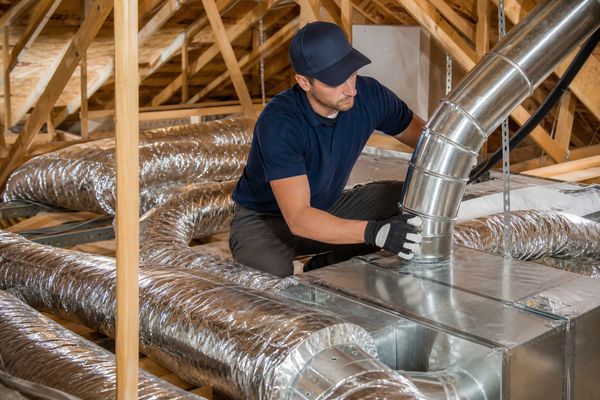
Ductwork
Duct repair, sealing, replacement, and cleaning for optimal airflow.

Indoor Air Quality
Air filtration, purification, and ventilation for healthier indoor air.
Get Three Heating Repair Quotes in Clovis
Compare pricing, availability and warranty from licensed Fresno County technicians. Free, fast and no obligation.