A low installation price can climb fast when the agreement leaves out permits, duct repairs, or electrical work. An underspecified or unsuitable system can also affect energy bills. Before signing an HVAC installation contract, California homeowners should make sure it identifies what you’re buying, who handles approvals, and when payment becomes due.
Verbal promises about equipment, warranties, or completion dates are hard to enforce if they never reach the paperwork. Start with the contractor’s credentials, then review the work and payment terms together.
Key Takeaways
- Verify the contractor’s current CSLB license, relevant credentials, insurance, and responsibility for subcontracted work before signing.
- Specify the exact equipment, sizing basis, included installation tasks, exclusions, permits, inspections, and any required Title 24 testing in the written scope.
- Compare itemized bids for equivalent work, follow California’s residential down-payment limit, and tie progress payments to work performed or materials delivered.
- Require signed change orders before extra work begins, and define completion checks, final documentation, cancellation rights, and separate parts and labor warranties.
Verify the Contractor Behind the Proposal
Match the license to the business
Verify local HVAC contractors and their licenses through the CSLB license lookup immediately before signing. The business name and license number on your agreement should match the current record.
For typical residential heating and air conditioning installation, look for the appropriate C-20 Warm-Air Heating, Ventilating and Air-Conditioning classification. Confirm the license is active, and review its bond, workers’ compensation information, and any disclosed disciplinary history.
Also identify who will supervise the installation and whether subcontractors will perform separate electrical or other work. Those tasks need appropriate licensing, too. Pre-screening through a referral service doesn’t replace your own current check.
Confirm insurance and refrigerant credentials
Request evidence of liability insurance and applicable workers’ compensation coverage. A contractor license or bond alone doesn’t establish every insurance protection.
Technicians performing covered refrigerant work need EPA Section 608 certification. This technician credential differs from California contractor licensing.
Ask who will recover refrigerant and remove the old equipment. The contract should assign those responsibilities rather than leave disposal for you to arrange afterward.
Put Every Installation Task in Writing
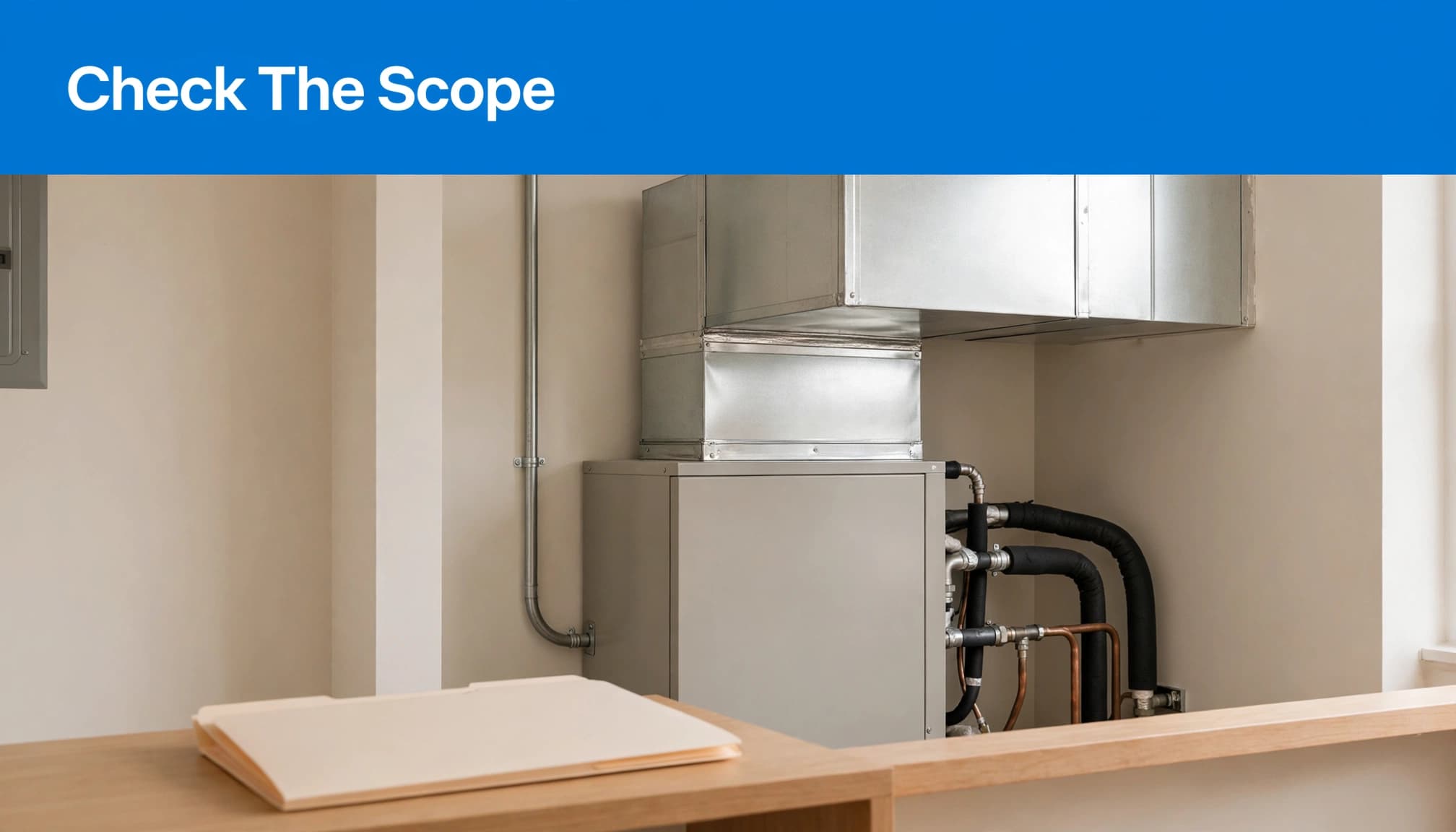
“Install new system” isn’t enough detail. Your HVAC installation contract should describe the equipment replacement and supporting work needed for it to operate correctly.
Check whether the agreement includes these tasks where applicable:
- Remove and dispose of existing equipment, including proper refrigerant recovery.
- Replace or evaluate refrigerant lines, drainage connections, and the equipment pad or stand.
- Inspect ducts and identify sections to seal, repair, insulate, or replace, including any ductwork installation.
- Complete specified electrical, thermostat, gas, and venting work.
- Protect your property, repair agreed damage, and remove installation debris.
For a complete HVAC system installation, including heat pump installation, confirm whether the price covers both indoor and outdoor equipment. An outdoor condenser alone is a substantially different scope from a coordinated replacement.
Name exclusions just as clearly. Separate optional duct cleaning, air cleaners, drywall repairs, and electrical panel upgrades from the base price.
If existing components will stay, state which ones and how the contractor will assess their suitability. An unchecked line set or inaccessible duct system creates uncertainty that should be addressed before work starts.
Specify Equipment Models and the Sizing Basis
Identify the complete equipment package
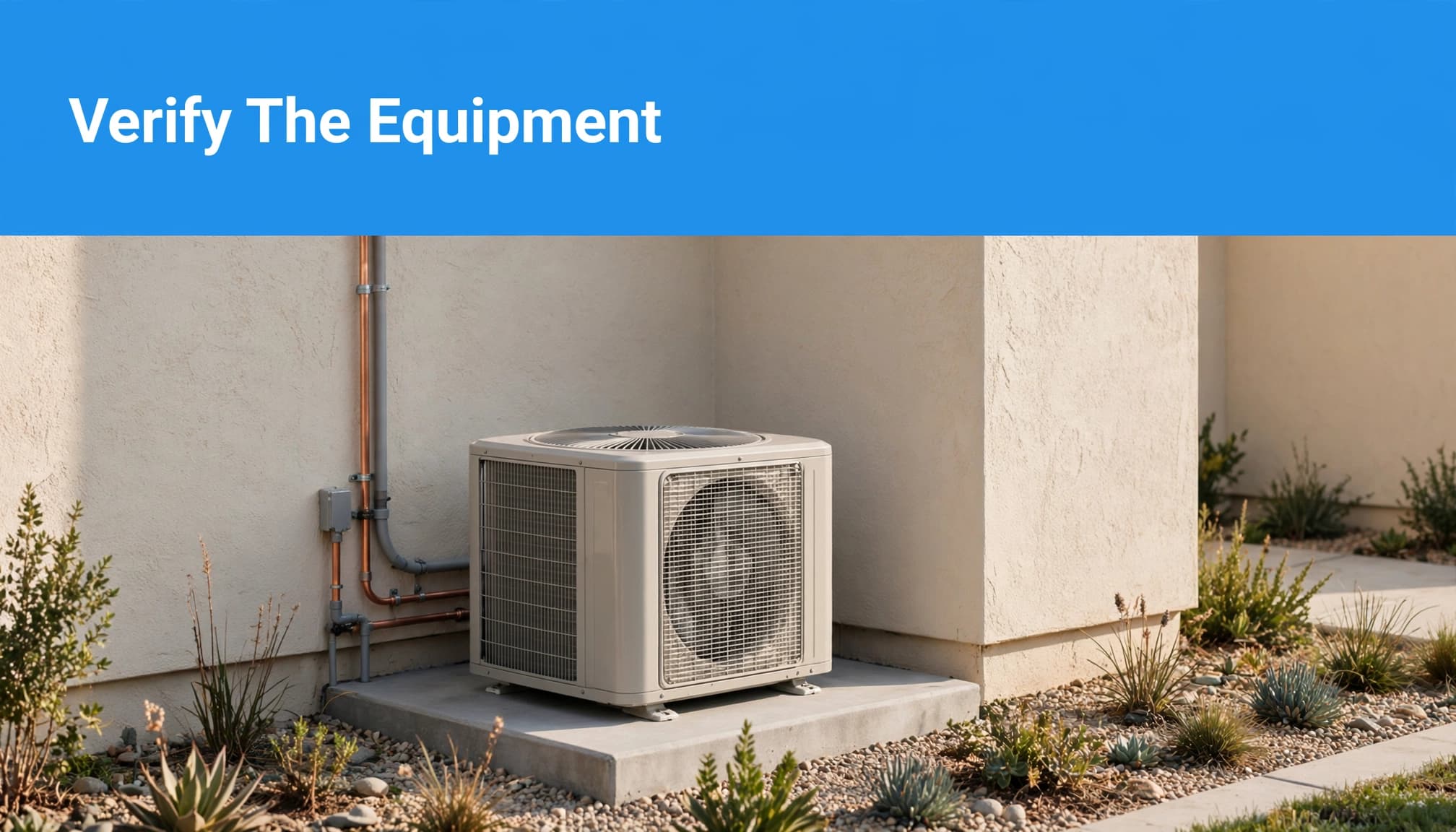
List the brand, exact model numbers, capacity, refrigerant, thermostat, and applicable efficiency ratings. These may include SEER2 for cooling, HSPF2 for heat pumps, and AFUE for a furnace.
Carrier, Lennox, Rheem, and Trane each sell different equipment tiers. A brand name alone won’t tell you whether competing bids offer equivalent systems.
Require your written approval before substitutions. If equipment availability changes, the replacement should have documented specifications, warranty terms, and any price adjustment. Also identify the matched indoor coil or air handler, rather than leaving that component unspecified.
Document load calculations and duct findings
Ask the installer to explain the sizing method. For residential work, a Manual J load calculation is a useful basis for evaluating heating and cooling capacity.
Square footage alone doesn’t account for insulation, windows, orientation, or air leakage. Likewise, copying the old unit’s size can repeat an existing mistake.
The proposal should document the system design, including capacity, matched indoor and outdoor components, and airflow considerations. It should also address supply and return airflow and known duct problems. Larger equipment won’t correct undersized returns or damaged ducts. Put any promised airflow improvements into the scope.
Assign Permit and Title 24 Responsibilities
Require issued permits and inspection closeout
Check with the local building department to confirm which permits, including mechanical permits, and inspections apply. California HVAC changeouts commonly require permits, but requirements vary by jurisdiction and scope.
The agreement should identify who obtains permits, pays fees, schedules inspections, and corrects installation-related deficiencies. Include electrical or other approvals when the project requires them.
Keep copies of the application and issued permit. A submission receipt isn’t permit approval. Also require final inspection approval, since an operating system can still have an open permit.
Don’t accept a proposal to skip a required permit as a cost-saving option.
Identify applicable energy documentation and testing
The California Energy Commission’s 2025 Building Energy Efficiency Standards apply to building permit applications submitted on or after January 1, 2026. Check with the local jurisdiction for how the statewide standards apply to your project.
Title 24 compliance involves more than energy efficiency equipment selection. Depending on the installation, requirements can include airflow, fan watt draw, refrigerant charge, and duct leakage verification.
Ask which forms, tests, and independent verification your project needs. Requirements depend on the equipment, scope, climate zone, and applicable exceptions.
Assign responsibility for arranging verification, correcting failed tests, and delivering completed compliance records. Those costs should appear in the proposal, not arrive as unexplained extras.
Compare Installed Prices and Payment Milestones
Compare equivalent work before comparing totals
Request an itemized installed price separating equipment, labor, ductwork, electrical work, permits, testing, and optional upgrades. Use the same scope to compare competing replacement estimates. There isn’t one dependable statewide price for every replacement.
A straightforward furnace replacement differs from a heat pump conversion requiring circuit changes. Similarly, an AC repair involving one electrical component shouldn’t carry the same scope as replacement.
When comparing air conditioner replacement quotes, give local HVAC contractors the same project information. Ask what the low bidder excludes and what documented problem a higher-priced option addresses. Treat any projected change in energy bills as an estimate, not a guarantee.
Treat utility rebates separately until the contractor identifies the program, eligibility requirements, and application responsibility. Don’t compare a guaranteed price with another bid reduced by an uncertain incentive.
Tie payments to delivered value
For most California residential home improvement contracts, the down payment cannot exceed $1,000 or 10% of the contract price, whichever is less.
The CSLB sample home improvement contract illustrates required payment disclosures. Progress payments should correspond to work performed or materials delivered, rather than dates alone.
Define payment amounts and milestones clearly. Agree on the final-payment conditions before signing, including inspection closeout and required documents.
If financing is offered, compare the cash price with total repayment. Request the APR, term, fees, and deferred-interest conditions. A smaller monthly payment can still mean a higher total cost.
Require Signed Change Orders Before Extra Work
An installation can reveal hidden damage or unsuitable existing components. However, that possibility shouldn’t give the contractor unlimited authority to increase the price.
Require a written change order describing the additional work, its cost, and any schedule adjustment. Both parties should sign before the changed work begins.
Ask the contractor to document the condition that prompted the change. Photos and a clear explanation help distinguish necessary corrections from optional upgrades.
Known uncertainties deserve attention before signing. If the contractor hasn’t inspected the ducts or assessed electrical capacity, ask whether the price includes an allowance or excludes that work.
Also address equipment substitutions through the change-order process. A different model can affect efficiency, rebate eligibility, or warranty coverage even when the contractor calls it equivalent.
Keep every approved change with the original agreement.
Read Cancellation Rights Before Signing
California generally requires a written home improvement contract when the combined price for labor, services, and materials exceeds $500. You should receive a complete signed copy, including applicable notices, before work begins.
For covered transactions, homeowners generally have three business days to cancel. Certain covered buyers age 65 or older have five business days. Exceptions may apply depending on the transaction.
Review the CSLB contract warnings and exceptions, and check the notice included with your agreement.
The paperwork should explain the deadline and how to deliver a cancellation notice. Keep evidence of any notice you send. Don’t assume an informal phone call satisfies the stated process.
If a salesperson requests an immediate start or emergency waiver, understand the applicable requirements before signing. Never sign blank forms or rely on a promise that missing terms will appear later. This is general information, not legal advice.
Define Completion, Testing, and Warranty Coverage
Make completion more than equipment startup
Include approximate start and completion dates, plus a process for handling equipment delays or concealed conditions. Identify who communicates schedule changes, arranges access, and confirms contractor availability if timing shifts.
Before final acceptance, require documented startup checks appropriate to the system. The commissioning process should record airflow and static-pressure readings, thermostat setup, drainage checks, and refrigerant level when applicable.
For a gas furnace, include appropriate gas-leak, venting, combustion safety, and carbon monoxide checks. These address safety concerns that a brief demonstration of warm air won’t resolve.
Equipment startup and permit closeout are separate milestones. Your contract should require both before the project is considered complete.
The handover should include model and serial numbers, operating instructions, warranty records, applicable energy documents, and final inspection approval.
Separate parts, labor, and maintenance obligations
Manufacturer equipment coverage and contractor labor coverage have different warranty requirements. Record the duration, covered items, exclusions, and process for requesting service under each.
Ask whether coverage includes diagnostic visits, refrigerant, travel, or labor to replace a failed part. Confirm who registers the equipment and what registration deadlines apply.
Also clarify whether maintenance affects coverage. A satisfaction guarantee should have written terms, but it doesn’t replace the actual warranties.
If preventive maintenance is offered, price it separately from installation warranties and any service contracts. State the visit frequency and included work, such as coil cleaning, filter service, and electrical inspections. Regular maintenance may help support equipment life, but it can’t guarantee it. Distinguish maintenance charges from repair charges, and review renewal and cancellation terms.
Finally, identify your contact for unresolved installation problems and the agreed correction process.
Frequently Asked Questions
What should a California HVAC installation contract include?
It should identify the equipment models, installation work, exclusions, price, payment milestones, permit and inspection responsibilities, and any required testing. It should also explain change orders, completion documents, and warranty coverage.
Does an HVAC installation in California need a permit?
Permit and inspection requirements depend on the local jurisdiction and project scope, though HVAC changeouts commonly require permits. Confirm requirements with the local building department and make sure the contract assigns responsibility for permits, fees, inspections, and corrections.
How much can a contractor ask for as a down payment?
For most California residential home improvement contracts, the down payment cannot exceed $1,000 or 10% of the contract price, whichever is less. Progress payments should correspond to work performed or materials delivered, rather than dates alone.
Can the contractor charge extra for unexpected work?
Require a written change order that describes the additional work, cost, and any schedule adjustment. Both parties should sign it before the changed work begins.
What should I check before making the final payment?
Agree on final-payment conditions before signing, including applicable final inspection approval and delivery of required documents. Confirm that startup checks are documented and that you receive equipment details, operating instructions, warranty records, and applicable energy-compliance records.
Sign Only When the Terms Are Clear
A useful California HVAC installation contract connects the promised equipment, installation work, approvals, and payment schedule. It also tells you what happens when conditions change or the new system needs warranty service.
Compare proposals only after those details match. The lowest total deserves attention only when you understand its scope and exclusions.
Before signing, ask the contractor to put every material promise into the agreement. Clear paperwork gives you a better basis for judging both the price and the finished installation.