Your new air conditioning system can produce cold air and still have installation problems. HVAC commissioning in Los Angeles checks whether equipment, airflow, controls, and safety features work together as intended.
For homeowners, the practical goal is documented performance, not a quick demonstration at the thermostat. Commercial buildings usually require a broader process, with formal testing plans and specialist oversight.
Start by understanding which checks belong in your installation scope and what records you should receive afterward.
What HVAC commissioning includes after installation
Commissioning tests an installed system against its design, operating requirements, and manufacturer specifications. Installer startup is one part of that work.
For a home, commissioning usually focuses on airflow, refrigerant charge, thermostat configuration, drainage, electrical operation, and heating safety. Commercial HVAC services may also include building automation, ventilation controls, boilers, pumps, and multiple operating modes.
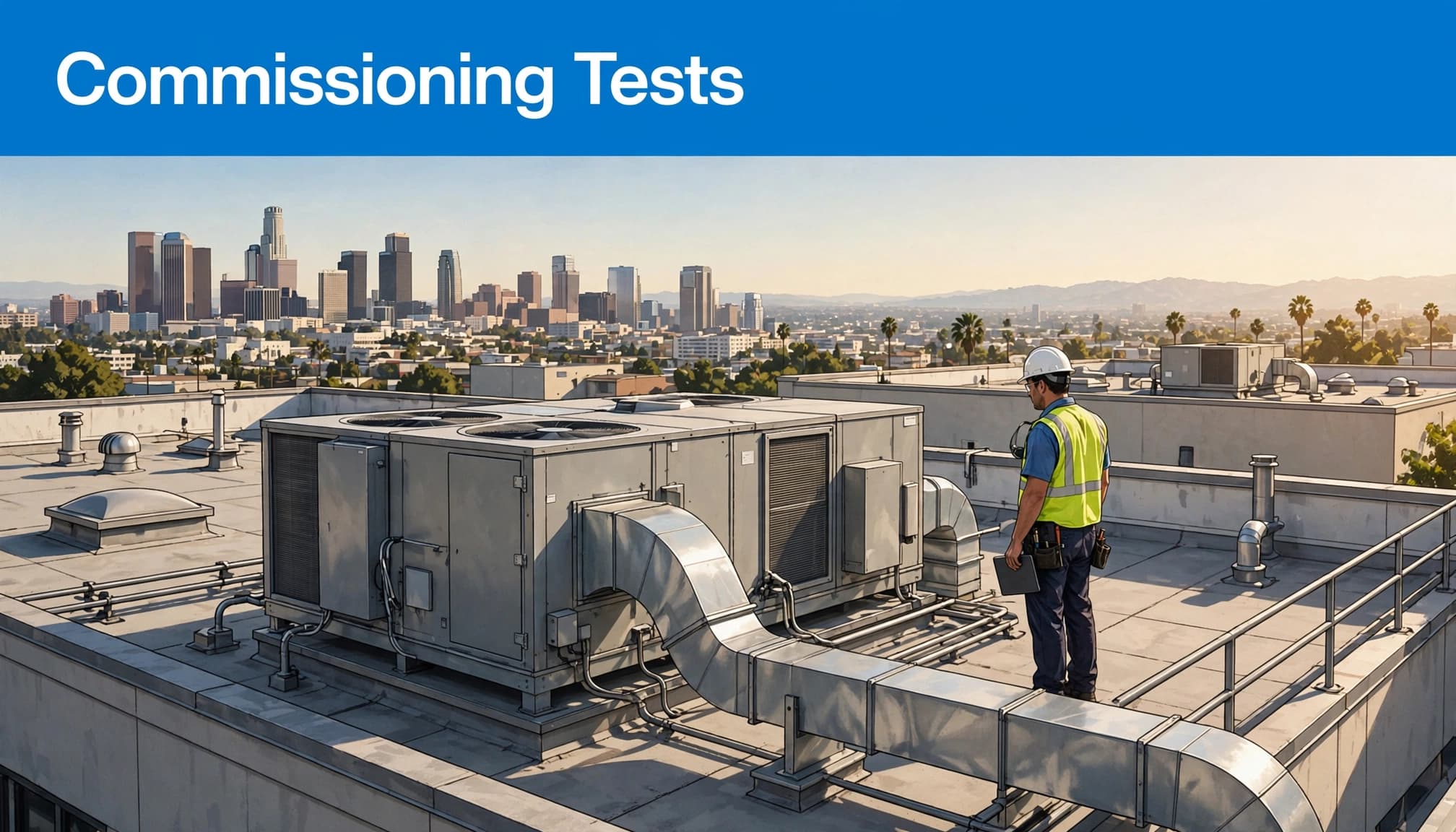
The commissioning authority, often called the CxA, coordinates formal commissioning. Installers perform startup and corrections, while testing and balancing specialists, such as a NEBB Certified Professional, measure system delivery.
Although much of the testing happens after installation, commissioning planning should begin earlier. Otherwise, the team has no agreed performance targets for judging the finished system.
Establish the requirements before testing
Define the Owner’s Project Requirements
The Owner’s Project Requirements, or OPR, describes what the building owner expects. It can address comfort, air quality, ventilation, operating schedules, maintenance access, and energy performance.
On a commercial project, OPR development normally starts before construction. After installation, the commissioning team uses that document to define acceptance criteria.
Homeowners don’t usually need an extensive commercial OPR. However, their installation agreement should still identify rooms with comfort problems, intended thermostat zones, and promised airflow improvements. An oversized unit won’t fix undersized return ductwork.
Review construction documents and site conditions
Construction document reviews compare the design, equipment selections, control sequences, and installation details with the OPR. They also check applicable Title 24 requirements and the project’s energy efficiency goals. The basis of design, or BOD, explains how the designer intends to meet those requirements.
Site visits then compare those documents with the installed work. The team looks for mismatched equipment, inaccessible components, incomplete wiring, and ductwork problems.
Pre-functional checks follow: filters installed, drains connected, dampers positioned, equipment labeled, and startup records completed. These checks establish readiness before functional performance testing begins.
Measure airflow and test actual operation
Testing and balancing establishes delivery
Commercial HVAC services often include testing and balancing (TAB), which measures delivered air or water against project targets. Technicians adjust fans, dampers, and balancing valves to meet those targets.
Some commercial teams include a NEBB Certified Professional with air and hydronic measurement experience. NEBB describes the relationship between these activities and whole-building technical commissioning.
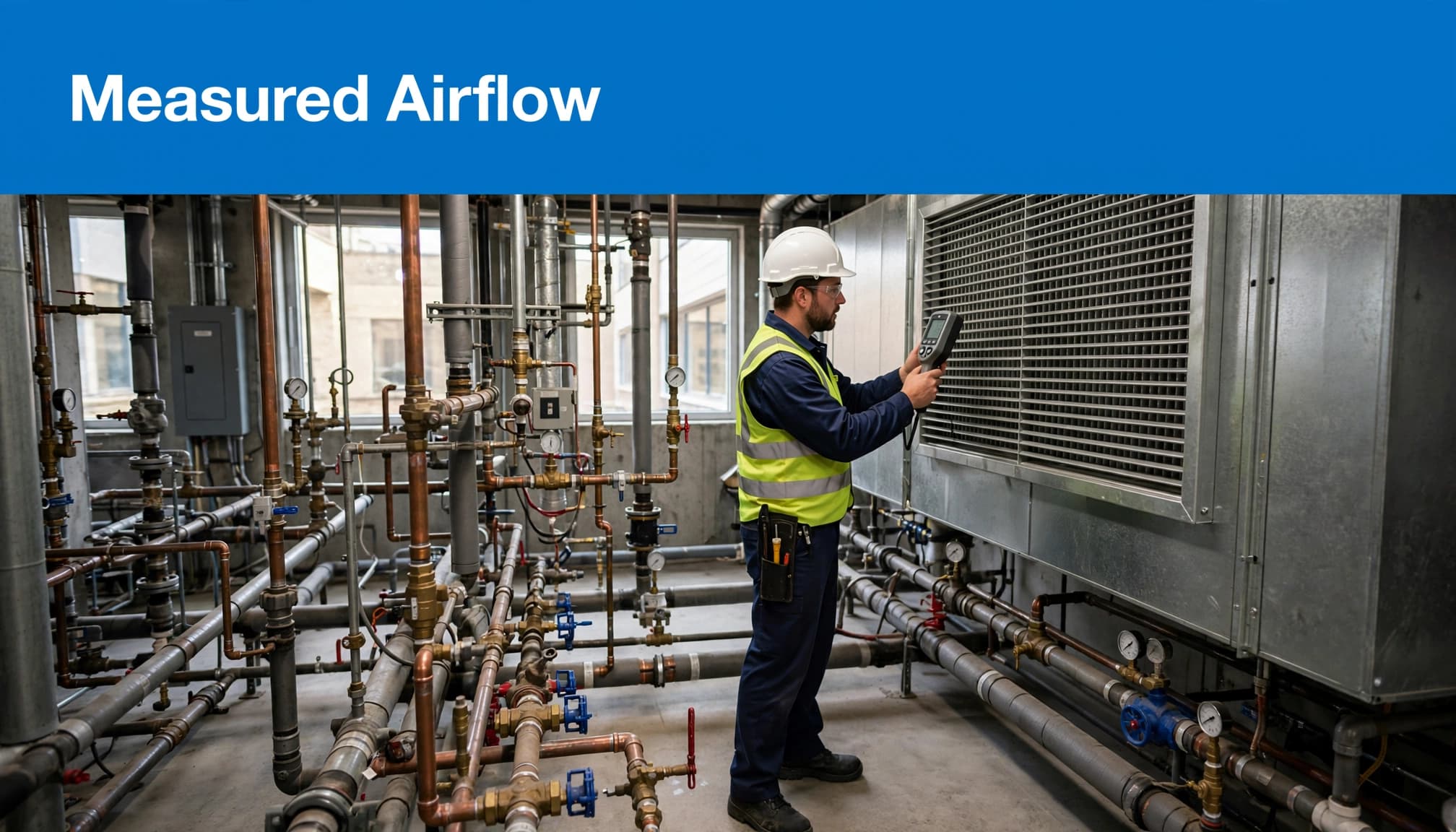
For a home, useful records include airflow and external static pressure. Excessive resistance can reveal a restricted return, dirty filter, or duct problem even when the AC starts normally.
Functional tests exercise the controls
Functional performance testing runs the system through its intended operating sequences. Technicians test cooling, heating, thermostat response, and applicable safety controls.
A residential heat pump needs correct heating and cooling operation. A commercial system may require tests of occupied schedules, economizers, ventilation settings, alarms, and building automation commands.
Refrigerant testing follows the manufacturer’s procedure under suitable operating conditions. Drainage checks should include condensate removal and any installed overflow protection.
For a gas furnace or boiler, appropriate checks address gas leakage, venting, combustion, and carbon monoxide hazards. Boiler servicing helps detect conditions that can cause dangerous leaks, and service records may support insurance requirements.
Failed tests require correction and retesting before acceptance.
Title 24 requirements in Los Angeles County
California’s Title 24, Part 6 energy standards apply to residential and commercial HVAC projects in Los Angeles County. The applicable requirements depend on the building, equipment, project scope, and exceptions.
The California Energy Commission’s Building Energy Efficiency Standards establish January 1, 2026, as the effective date for the 2025 Energy Code. That edition applies to permit applications submitted on or after that date.
Commercial requirements address HVAC equipment efficiency, automation controls, applicable duct sealing, and compliance documentation. Depending on the project, required testing may include controls acceptance or other performance verification.
Residential installations can involve airflow, fan watt draw, refrigerant charge, and duct leakage verification where applicable. Commissioning should coordinate with those requirements without treating every installation as identical.
A system that runs can still have an open permit. Equipment startup, required energy testing, and final inspection approval are separate milestones.
The installation agreement should assign responsibility for each milestone, including corrections when required tests fail.
How LEED, ASHRAE, and retro-commissioning differ
LEED adds defined commissioning obligations
For projects pursuing LEED, commissioning follows the applicable rating system’s requirements. USGBC’s fundamental commissioning and verification requirements include reviewing the OPR, BOD, and design, plus developing and implementing a commissioning plan.
Enhanced commissioning requirements add work beyond the fundamental scope. Depending on the selected pathway, that can include further reviews, training verification, and follow-up activities.
A routine home replacement doesn’t automatically require LEED commissioning. Those obligations belong to projects pursuing the relevant certification.
ASHRAE guidance covers the process
ASHRAE’s commissioning guidance, including Guideline 0, provides a framework for planning, documenting, and completing commissioning. It helps define responsibilities throughout a project.
Retro-commissioning applies to existing buildings whose systems need performance evaluation and adjustment. It can uncover incorrect schedules, conflicting controls, or ventilation problems without replacing every piece of equipment.
Recommissioning revisits a system that previously underwent commissioning. These services differ from a routine maintenance visit because they examine whether the building’s systems meet operating needs.
Choose expertise that matches your project
An HVAC contractor’s installation license and a commissioning specialist’s qualifications answer different questions. Residential startup, commercial controls testing, boiler work, and hydronic balancing require different capabilities. A NEBB Certified Professional may have relevant expertise, but the credential doesn’t define the project scope.
For example, Thermalair lists California C-4 boiler, C-20 HVAC, and C-38 refrigeration classifications, plus Nevada L-39 refrigeration and air conditioning. Those classifications describe contracting categories, rather than proving the scope of a commissioning assignment.
Airco Energy Systems is identified by CSLB license #754698. Its historical $15,000 contractor-bond listing shouldn’t be treated as the current California bond requirement or a commissioning credential.
Design expertise also matters. Top Dog Engineering emphasizes upfront HVAC engineering to reduce redesigns, requests for information (RFIs), and field conflicts. That work can reduce installation problems before testing starts.
Meanwhile, Inland Mechanical Services advertises free system analysis and free estimates for new installations. An estimate or preliminary analysis is different from a documented commissioning service.
For your project, the written scope should name the tests, including testing and balancing, responsible parties, reports, and the correction process. That makes proposals easier to compare than a general promise to “test everything.”
What you should receive at handover
Commissioning ends with evidence of completed work. A verbal statement that the system “looks good” leaves you without a useful baseline.
Your commissioning closeout package should include:
- Equipment model and serial numbers, operating instructions, and warranty records.
- Recorded startup and performance readings, applicable balancing reports, and functional test results.
- An issue log showing corrections, outstanding work, and completed retests.
- Applicable energy-compliance documents and final inspection approval.
For homeowners, the report should explain thermostat settings, basic filter care, and a preventative maintenance schedule. Commercial owners also need operating sequences and staff training appropriate to the installed systems.
Our HVAC installation contract checklist covers how to assign these responsibilities before work begins. Keep manufacturer parts coverage separate from the contractor’s labor warranty.
If weather prevents a valid seasonal test, the closeout records should identify the deferred test and who will complete it.
Keep performance on track after commissioning
Schedule maintenance and recognize warning signs
Commissioning establishes a baseline; preventative maintenance helps preserve it. Commercial HVAC systems should receive a full inspection at least annually, with twice-yearly visits appropriate for many systems.
For Los Angeles homeowners, spring cooling service and fall heating service provide a practical schedule. Service can include coil cleaning, electrical testing, drain clearing, performance measurements, and indoor air quality checks.
Seven warning signs deserve attention: unusual noises, inconsistent temperatures, higher energy bills, poor air quality, frequent cycling, visible leakage, and reduced airflow. Persistent post-installation problems may need warranty correction; an HVAC contractor can assess whether retro-commissioning is appropriate instead of ordinary AC repair or routine maintenance.
Between visits, replace filters as directed and keep supply registers, returns, and outdoor equipment unobstructed. Leave refrigerant, internal electrical, and combustion work to qualified professionals.
Use incentives for qualifying upgrades
Southern California utility rebates can offset qualifying HVAC upgrades, but commissioning alone doesn’t establish eligibility. Programs depend on the equipment, customer account, and program terms.
Southern California Edison’s rebate programs include qualifying air conditioners and smart thermostats. SoCalGas also offers energy efficiency rebates and incentives for eligible products.
For ongoing care, we connect homeowners with up to three independent, licensed contractors through our Los Angeles County HVAC maintenance and tune-up quote service. We arrange quote matching; the independent contractors perform the work.
Key takeaways before accepting the installation
A complete commissioning scope gives you more than proof that the equipment turns on.
Measured results should show that airflow, controls, drainage, and applicable safety checks meet the project’s requirements. Commercial work may also require formal commissioning plans, specialist balancing, and LEED documentation.
Permit closeout and energy-compliance records belong alongside the performance report. Keeping those documents together makes future service, warranty discussions, and troubleshooting easier.
Frequently Asked Questions
What does HVAC commissioning check after installation?
Commissioning checks the installed system against its design, operating requirements, and manufacturer specifications. Residential checks usually cover airflow, refrigerant charge, thermostat configuration, drainage, electrical operation, and heating safety.
Does a running HVAC system mean the installation is complete?
A system that runs doesn’t confirm that required performance tests, energy-compliance steps, or final inspection are complete. Check the agreed scope and closeout records for test results, corrections, and retests.
What records should I receive after commissioning?
Ask for equipment model and serial numbers, startup readings, applicable balancing reports, functional test results, and an issue log showing corrections and retests. Closeout records should also include applicable energy-compliance documents, final inspection approval, warranty records, and operating instructions.
How often should an HVAC system be maintained after commissioning?
Commissioning establishes a baseline, while maintenance helps preserve it. For many Los Angeles homes, schedule cooling service in spring and heating service in fall; commercial systems should receive a full inspection at least annually, with twice-yearly visits appropriate for many systems.
Accept the system based on documented performance
HVAC commissioning should document test results, confirm installation issues are resolved, and explain operation of the complete HVAC system. The depth of testing should match your home or building.
Before accepting the installation, use the agreed scope and closeout records to judge completion. Cold air at one vent is only one observation; documented performance gives you a dependable baseline for the entire system.