A working AC can feel urgent during a hot Vista afternoon, making emergency HVAC service seem essential. But hiring the first available installer can create a longer-lasting problem.
Checking an HVAC contractor’s license in Vista takes minutes and helps confirm who will be responsible for the work. The check matters for heating and air conditioning work, from furnace repairs to heat pump installations. Vista homeowners can verify the California record, then confirm insurance, refrigerant credentials, and permits before signing.
Why licensing matters for a Vista HVAC job
California contractors can be checked through the Contractors State License Board (CSLB), which issues the C-20 Warm-Air Heating, Ventilating and Air-Conditioning classification. License requirements depend on the work being contracted. For substantial work on heating systems or cooling systems, ask for the company’s license number and confirm its active classifications cover the job.
A license number on a van or estimate isn’t proof by itself. It might belong to a different business, carry an inactive status, or fail to match the company named in your contract. Those differences are easy to miss when your system has stopped working.
Licensing is also only one part of the decision. A contractor can hold the right classification yet offer a vague scope, skip a needed permit discussion, or recommend equipment without assessing your home. Verify the company first, then compare what each qualified bidder proposes.
How to run an HVAC contractor license check in Vista
Match the license to the company
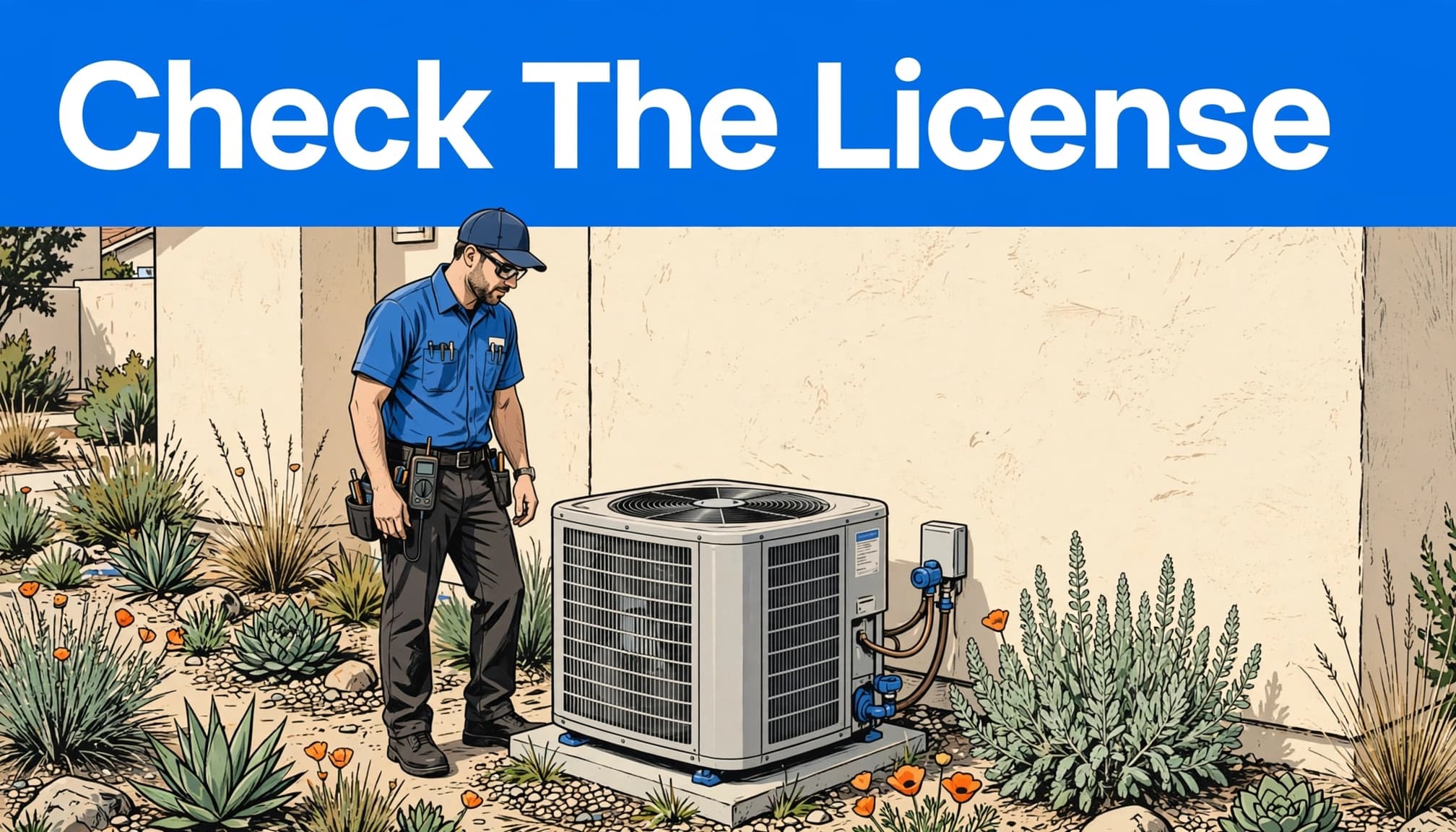
Ask for the contractor’s California license number before the appointment or estimate. Enter it in the CSLB’s contractor license lookup, then review the CSLB license record rather than stopping at the first matching result.
Check that the business name matches your proposal and that the license is active. Look for the C-20 classification when the company is offering HVAC work. Review any bond and workers’ compensation information available on the record. If the salesperson uses one business name but the agreement names another, ask the company to explain before paying anything.
Don’t have a license number? The CSLB’s guidance on finding a licensed contractor explains how to search by business or contractor name. You can also call the board at (800) 321-CSLB (2752).
Check again before work starts
Do the lookup when gathering bids, then repeat it before signing if weeks have passed. Save the license number alongside the written estimate so you can compare the contracting business with the name on the invoice and permit paperwork.
A company name that sounds familiar isn’t enough. Different firms can use similar names, and an HVAC service technician’s qualifications aren’t a substitute for checking the contracting business. That distinction matters most on larger installations, where several people may visit your home.
Check insurance and refrigerant credentials separately
Workers’ compensation is a C-20 requirement
California’s workers’ compensation rules for contractors require C-20 license holders to carry workers’ compensation coverage or valid self-insurance, even if they have no employees. Don’t accept a casual “I’m exempt” as the end of that conversation.
Read the workers’ compensation entry in the CSLB record. Also ask for proof of general liability insurance, then confirm the named business and coverage dates with the insurer or agent. General liability and workers’ compensation address different risks, and neither replaces the other.
Section 608 applies to refrigerant work
If the job involves opening a refrigerant circuit, ask who will perform that work and whether the HVAC service technician holds the appropriate EPA certification under Section 608. The EPA requires technicians to pass an approved test for covered refrigerant-handling work. Its Section 608 certification requirements explain the certification types.
An EPA credential belongs to the technician, while a CSLB license belongs to the contracting business. You won’t establish both by running one license search. For an AC repair involving refrigerant or a new heat-pump installation, ask the company to confirm who will handle and recover refrigerant. A technician who never works with the refrigerant circuit doesn’t need that credential for unrelated tasks.
Confirm Vista permit requirements before installation
Start with the authority for your address
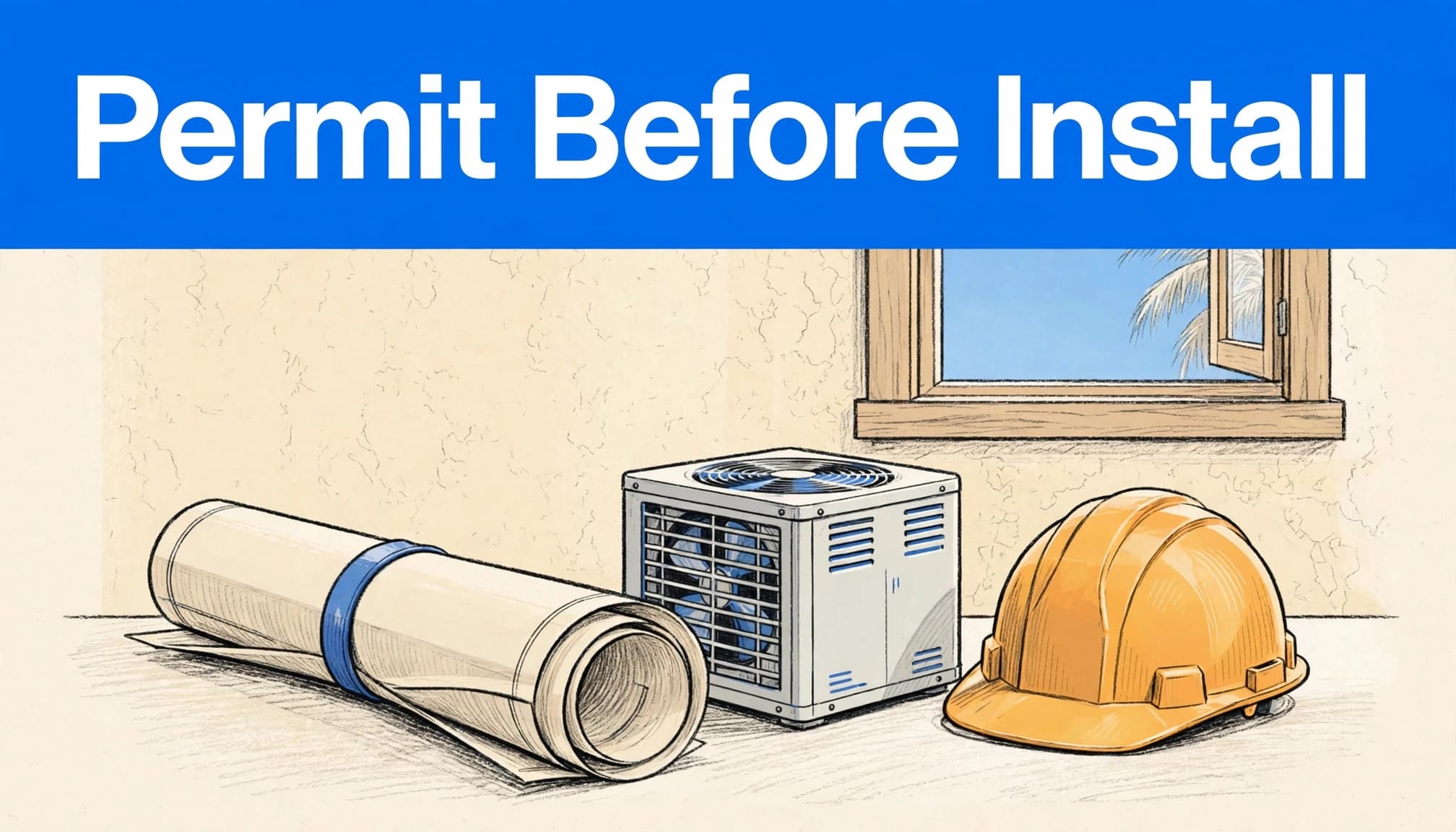
For a home inside Vista city limits, check requirements with the City of Vista. A Vista mailing address alone doesn’t establish permit jurisdiction; some nearby properties fall in unincorporated San Diego County. Ask the contractor to identify the permitting authority for your actual property address.
The City’s building forms and permit information is the right starting point for building permits inside city limits. City records include mechanical permits for projects such as AC replacements, furnace installation, heat pumps, air handlers, ductwork, and ductless mini-splits. The exact scope determines what your project requires. Ask the City about a repair, replacement, or HVAC installation rather than assuming every service call needs a permit.
Settle who applies and schedules inspection
Permit submission instructions can change, so confirm the current process with Vista before anyone files. Don’t use a San Diego County or City of San Diego portal for a Vista city permit simply because it appears in search results.
Before signing, get written answers to four questions: Who will apply, what permit is expected, who pays the fee, and who schedules the required inspection? Ask for the permit number when issued and the final inspection record when the job is complete.
A line for “permit included” is useful only if the quote also says who obtains it and handles the inspection.
Compare qualified contractors on the actual work
A valid HVAC contractor license gets a company into consideration; the proposal shows whether its plan fits your home. This matters in older Vista houses with uneven room temperatures or aging ductwork, which can affect airflow and indoor air quality. A new condenser alone may not fix the problem.
Ask for a diagnosis before choosing a fix
For an air conditioner repair estimate, ask the HVAC service technician for a written description of the fault, proposed parts, labor, and any diagnostic charge. If replacement is recommended, ask what test results support it and whether repair remains reasonable.
For a new system, the estimate should list equipment model numbers and address sizing, duct condition, and any needed electrical or venting changes. A heat pump may raise different questions than a like-for-like furnace swap. When comparing heat pump services in Vista, ask how each proposed system will heat, cool, and distribute air in your home.
Compare the same scope across quotes
You can use Vista HVAC repair and installation services to request up to three quotes from local HVAC companies without an obligation to hire. Before choosing a contractor, run your own current CSLB check on the business named in each proposal.
Compare written estimates side by side, including equipment, labor, permit handling, removal of old equipment, and warranties. List separately scoped tasks, such as duct cleaning, apart from the main equipment work. Separate the manufacturer’s parts warranty from the contractor’s labor warranty. If one price is much lower, ask which tasks or materials are excluded rather than assuming it covers the same job.
What should a Vista HVAC project cost?
There isn’t one useful price for “HVAC work.” An AC repair involving an electrical part differs from a refrigerant leak diagnosis. System replacement estimates can vary if a furnace needs venting changes or an AC installation uncovers damaged ductwork or electrical issues.
For a repair, ask for the diagnostic fee and an itemized price before authorizing the fix. For replacement, compare exact equipment models, energy efficiency, and every installation task. Permit fees, duct repairs, disposal, and thermostat work should appear in the scope when applicable.
If your system fails during hot weather, ask about emergency HVAC service and any after-hours charge. For planned work, compare air conditioner replacement in Vista proposals after each bidder inspects the same equipment and home. A price without that context can hide the most expensive differences.
Warning signs that deserve a pause
A contractor who won’t provide a license number, uses a business name that doesn’t match the CSLB record, or pressures you to sign before discussing permits needs closer scrutiny. The same goes for a replacement bid with one total but no equipment details or clear scope.
Warm air, short cycling, poor airflow, or unusual furnace operation can call for prompt emergency HVAC service. Ask an HVAC service technician to diagnose the issue. If you smell gas, leave the area and contact your gas utility or emergency services; don’t wait for competing estimates. For heat pump repair or another fix, ask the technician to explain the fault and proposed work before approving it.
Key takeaways for Vista homeowners
- Check the contracting business in CSLB records and confirm an active, appropriate license before signing.
- Verify workers’ compensation and ask who holds Section 608 certification when refrigerant work is involved.
- Confirm your property’s permit authority, the current application route, and who will handle inspection.
- Compare written scopes, not headline prices, especially for full system replacements.
Frequently asked questions
Does every HVAC repair in Vista need a permit?
Don’t assume so. Permit requirements depend on the work and the authority responsible for your address. Describe the proposed repair or installation to the City of Vista if your property is inside city limits, and get the contractor’s permit plan in writing.
Can I rely on a pre-screened contractor’s license check?
Pre-screening helps narrow your choices, but you should still check the current CSLB record yourself. Match the licensed business to the agreement you’ll sign, and review its classification and workers’ compensation details.
Is an EPA card the same as a C-20 license?
No. Section 608 certification applies to a technician’s covered refrigerant work. The C-20 license identifies a California contractor authorized for work within that classification. For a refrigerant-related job, ask about both credentials.
Hire with the paperwork in place
When your heating or cooling stops, speed matters. A quick license lookup still gives you time to catch a mismatched business name or missing coverage before the job begins.
For a Vista installation, pair that check with a written scope and a clear permit plan. The right comparison is between contractors who can document their credentials and explain exactly what they’re quoting.