A furnace can sit idle for months in Orange County, then fail on the first cold night you need it. For a residential HVAC project, the installed price matters more than the price of the unit. A typical installed job falls between $7,000 and $11,000, but the scope can move that number substantially.
A useful estimate accounts for your home’s heating load, the condition of its ducts, permits, and any changes to venting. Start by separating a straightforward furnace swap from a larger heating and cooling project.
Key Takeaways for Homeowners
- A simple furnace swap may land in the low $5,000s. Ductwork or code-related changes can push a complex job to $15,000 to $17,000 or more.
- Repair may make better financial sense when the heat exchanger is sound and the problem is a single replaceable part.
- Ask for the complete installed price, including venting, permits, disposal, testing, and warranty terms.
- If your air conditioner is aging, compare heating and cooling replacement options, including a furnace-and-AC quote and a heat pump. For a system in otherwise good shape, AC repair may be a practical alternative.
Orange County furnace replacement costs by project scope
Cost ranges are useful for planning, but only an in-home assessment can price your installation. A unit sold on its own doesn’t include the labor and materials required for an HVAC installation that works safely in your house.
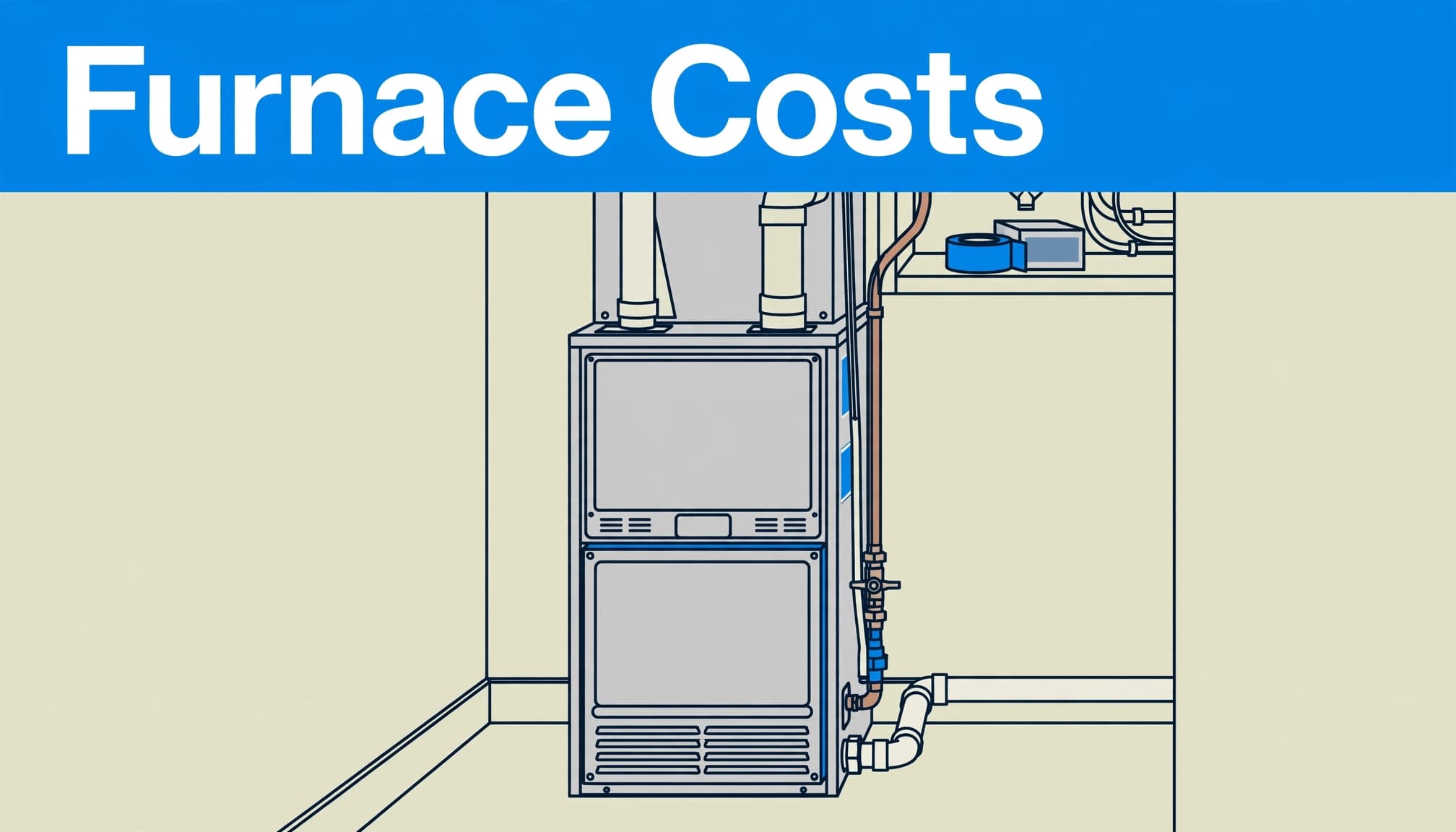
Equipment prices aren’t installed prices
These Orange County planning ranges describe different purchases. They shouldn’t be compared as if they include the same work.
| Project scope | Planning range | What the figure covers |
|---|---|---|
| Standard gas furnace equipment | $3,000 to $6,500 | Unit only, before installation |
| Electric furnace equipment | $2,000 to $4,000 | Unit only, before installation |
| Typical furnace replacement | $7,000 to $11,000 | Installed furnace project |
| Complex furnace replacement | $15,000 to $17,000+ | Installation with substantial additional work |
| Heating and cooling replacement | $12,500 to $19,000 | Both systems, rather than a furnace alone |
A straightforward swap can come in near the low $5,000s. That’s possible when the location, connections, and ductwork need little modification, not a price to expect at every address.
Match the estimate to the job you’re buying
Ask whether a quote replaces only the heating equipment or also includes the AC, indoor coil, or ducts. A furnace-only replacement keeps a usable air conditioner in place. A combined project has a higher upfront price because it buys more equipment and labor.
Final pricing depends on system type, home size, installation complexity, and permits. Brand, efficiency, and warranty choices also affect the total.
Why two furnace quotes can differ so much
Two contractors can visit the same house and propose different equipment or different amounts of supporting work. The cheapest bid may leave necessary work outside its stated price.
Access and ductwork change labor costs
A furnace in an accessible garage is generally easier to replace than one in a tight attic or closet. Relocating a unit adds another layer of work because the crew may need to change ducts, gas piping, or electrical connections.
Duct condition matters, too. Leaky runs or restricted returns can cause airflow problems and affect indoor air quality. Ask the installer to identify these issues before approving equipment. Spending more on a furnace won’t fix ducts that can’t move enough air.
Efficiency upgrades can change the installation
Annual Fuel Utilization Efficiency, or AFUE, describes how much of a furnace’s fuel becomes usable heat under a standardized test. A 95% AFUE gas furnace needs different venting and condensate handling than many older 80% AFUE units.
That can mean new piping, a drain connection, and more labor. Have each contractor state whether the price includes venting, gas-line work, disposal, and any required electrical changes. A higher-efficiency model may save fuel, but Orange County’s mild winters can make its payback slower than it would be in a colder region.
Choose between a gas furnace, electric furnace, and heat pump
The cheapest equipment isn’t always the least expensive choice over time. Existing connections, your AC’s condition, and how you use heating all matter.
Keeping gas can simplify a furnace-only project
If your gas furnace has failed but your air conditioning still has useful life, replacing the furnace alone may limit the work. Ask for the proposed unit’s AFUE, capacity, blower type, and exact model number. If the AC has a specific fault but may still be serviceable, compare an AC repair estimate with replacement.
An electric resistance furnace can have a lower equipment price than some gas options. However, it uses electricity to produce heat directly. Compare projected operating costs to understand the effect on energy bills before choosing it for a whole-house replacement.
A heat pump deserves a quote when the AC is aging
A heat pump provides heating and cooling. Orange County’s mild winters make it a practical option for many homes, especially when both the furnace and AC need replacement. For a full system replacement, compare a local heat pump installation with the cost of buying separate systems.
Also ask whether the proposed heat pump can use your existing ducts and electrical service. If major upgrades are needed, include them in the comparison. Coastal exposure and hotter inland afternoons can affect equipment selection, so the contractor should size it for your address rather than the county as a whole.
Repair or replace the existing furnace?
Age alone doesn’t decide the question. A 16-year-old furnace with an inexpensive failed igniter poses a different choice than one with repeated breakdowns and a damaged heat exchanger.
A single component failure may justify repair
Common repairable faults include a flame sensor, igniter, thermostat, control board, or blower component. Gas furnace repair for these issues often has repair costs around $150 to $800, depending on the fault. When arranging heating repair, ask the technician to identify the failed part and check for an underlying cause, such as restricted airflow.
If the unit is under roughly 15 years old, repairs have been infrequent, and its heat exchanger is sound, get a repair price before committing to replacement. Preventative maintenance may catch developing issues, but it won’t prevent every failure. A repair approaching half the cost of a comparable new installation deserves closer comparison, but that rule isn’t a substitute for a diagnosis.
Safety and repeated failures change the calculation
Major heat-exchanger work can have repair costs of roughly $1,200 to $3,500. On an older furnace, replacement may be the better use of that money. Ask what inspection supports a cracked-exchanger diagnosis and seek a second opinion if the finding is unclear. Don’t operate equipment a technician has identified as unsafe.
If you smell gas, leave the building and contact your gas utility or emergency services from outside. Never accept a repair that bypasses a safety switch. If the furnace stops producing heat without a gas smell, contact a contractor for emergency HVAC service. Frequent shutdowns, corrosion, and rising bills also justify comparing repair and replacement options.
Get the sizing, permits, and testing right
A replacement shouldn’t automatically copy the old furnace’s capacity. The original unit may have been oversized, or changes to insulation and windows may have altered the home’s heating needs.
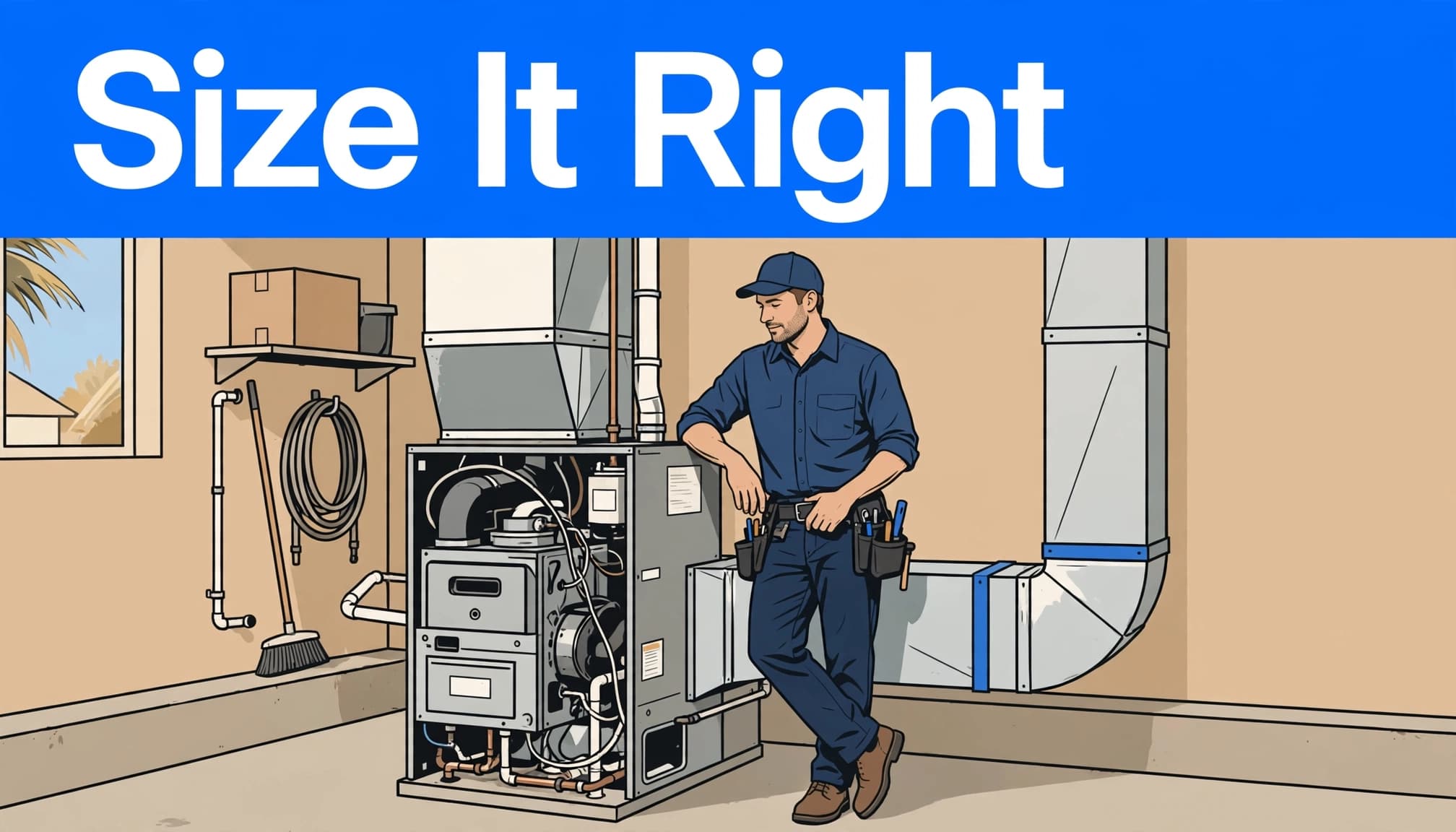
Ask how the contractor calculated capacity
A contractor should assess the home’s heating load, commonly using a Manual J calculation, rather than choosing a furnace by square footage alone. Capacity is measured in BTUs per hour. An oversized unit can cycle on and off too often, while an undersized one may struggle to heat distant rooms.
Have the contractor check return-air capacity, duct condition, and the compatibility of any remaining AC components. The model number and capacity should appear on the written proposal.
Confirm who handles the permit
California furnace replacements involve permit and energy-code considerations. The details depend on the project and the jurisdiction serving your address. California furnace permit guidance also describes compliance documentation, including the CF-1R form.
Ask who will obtain the permit, arrange any required testing, and close out the inspection. Cities such as Irvine and Anaheim may have different scheduling processes, so the contractor should confirm the process for your property. The quote should say whether permit fees and required duct testing are included.
Check rebates before subtracting them from the price
A rebate is helpful only if your equipment, contractor, permit, and application meet the program’s current rules. SoCalGas lists incentives for qualifying ENERGY STAR gas furnaces with AFUE ratings of at least 92%, but amounts and eligibility vary. Review the current SoCalGas rebate terms before treating an incentive as a discount.
Heat pump incentives need the same care. California’s residential energy rebate program information describes income-qualified assistance of up to $8,000 under HEEHRA. However, single-family reservations were reported fully reserved by February 2026. Confirm that a program is accepting applications before including its rebate in your budget.
Ask whether an installer applies on your behalf, what proof of permit closure is needed, and when payment would arrive. Keep the full contract price separate from a possible future reimbursement.
Compare Orange County contractor quotes on equal terms
Three totals aren’t enough if each contractor has priced a different system. Ask the same questions at every visit so differences become clear.
Require an itemized scope
Each proposal should name the equipment model and capacity, AFUE rating, labor, duct modifications, venting, permits, old-unit removal, and startup testing. Ask for separate manufacturer parts and installer labor warranty terms. Confirm who registers the equipment for warranty coverage.
Brand names such as Carrier, Lennox, Rheem, and Trane don’t tell you whether two bids are equivalent. Compare the actual models and included work. For local HVAC service, you can compare Orange County furnace replacement quotes once the scope is clear. If a bid includes broader heating and cooling work, confirm whether it covers system replacement beyond the furnace.
Verify the contractor before signing
Check the licensed contractor’s California license status and confirm insurance. Ask who supervises the gas connections, whether the crew will test combustion and carbon monoxide, and who handles the final inspection.
A contractor should explain an unusually low bid without relying on vague promises. If a company recommends immediate replacement after a minor fault, request its diagnosis in writing before deciding.
What happens during installation?
Before HVAC installation begins, the contractor should confirm the selected model, installation location, permit responsibility, and schedule. A like-for-like swap and a project requiring duct or venting changes won’t follow the same timetable. Ask when your heating will be unavailable and whether an inspection affects the completion date.
During installation, the crew removes the old unit, makes the necessary connections, and checks airflow and operation. For a gas furnace, commissioning by the HVAC service provider should include combustion and safety checks. Before final payment, request the permit record, warranty information, and a walkthrough of the new filter and thermostat settings.
Frequently Asked Questions
Does a larger Orange County home always need a larger furnace?
Often, but square footage alone can’t determine capacity. Insulation, windows, air leakage, ceiling height, and duct performance affect the heating load. Ask for the sizing calculation rather than assuming the old furnace was correct.
Should I replace my furnace and air conditioner together?
If the AC is newer and works well, a furnace-only quote may be sensible. If it has a repairable fault, compare AC repair with replacement. If both units are near replacement age, compare separate equipment with a complete heating and cooling installation and a heat pump option. Compare the entire installed price, not the furnace price alone.
Is a preseason furnace inspection worth paying for?
Yes, particularly for an older gas unit. Preseason HVAC maintenance is a useful form of preventative maintenance. A technician can inspect the heat exchanger, test combustion, check airflow, and catch ignition problems before a cold night. Replace a clogged filter when needed, and keep working carbon monoxide alarms in the home.
Make the Quote Fit the House
These costs make more sense when you compare the same scope across bids. The right price includes equipment sized for your home, necessary duct or vent work, permits, and testing.
Start with the diagnosis and the full installed cost. Then decide whether repairing the furnace, replacing it alone, or changing both heating and cooling offers better value for your home.