A suspiciously low bid can become expensive when installation day brings charges you thought were included. For Orange County homeowners, the most useful HVAC estimate red flags are missing details about equipment, supporting work, and who handles problems afterward.
You need upfront pricing before comparing contractors, with the full installed scope showing the replacement cost. A polished sales presentation doesn’t replace a written estimate or verified credentials, especially when a breakdown makes the decision feel urgent.
Start by checking what each proposal buys, then examine the sizing, permit plan, and payment terms.
Key Takeaways Before You Sign
- Compare written proposals covering the same equipment and installation tasks, with exclusions clearly identified.
- Verify the contractor’s current California license and insurance, and confirm who handles permits and inspections.
- Pause before signing for HVAC contractor red flags: high-pressure sales tactics, skipped sizing questions, or unsupported savings claims.
A cheaper proposal can offer good value. However, you need enough detail to distinguish an efficient installation from an incomplete bid.
HVAC Estimate Red Flags in the Written Scope

A verbal total or one-line description such as “replace AC system” leaves too much unresolved and can conceal vague line items or hidden fees. Request a written HVAC installation quote with an itemized breakdown before authorizing work.
Brand names alone don’t establish equivalence. Carrier, Lennox, Rheem, and Trane offer different models and equipment tiers. Each proposal should identify exact equipment specifications, including model numbers, capacity, SEER2 efficiency rating, and furnace AFUE where applicable.
Use these categories to compare bids side by side.
| Quote category | Details to request |
|---|---|
| Equipment | Indoor and outdoor models, capacity, SEER2 efficiency rating, and furnace AFUE where applicable |
| Installation labor | Removal, installation, connections, property protection, and cleanup |
| Ductwork | Inspection findings and specified repairs, sealing, or replacement |
| Electrical and drainage | Circuit, electrical disconnect, condensate line, and pump work where needed |
| Permits and testing | Application fees, inspections, applicable testing, and startup checks |
| Disposal | Equipment haul-away and refrigerant recovery |
| Options and exclusions | Thermostat, air cleaners, panel upgrades, and work outside the base price |
The important comparison is the same installed scope and replacement cost, not the smallest total.
Also confirm whether the price replaces both indoor and outdoor equipment. An outdoor condenser replacement differs substantially from a coordinated system replacement.
For local bids, request comparable AC replacement in Orange County proposals after contractors inspect the same home and existing equipment.
Finally, distinguish a fixed price with upfront pricing from an allowance or preliminary estimate. Ask what conditions could change the total and how the contractor will obtain approval.
Question the Sizing and Equipment Recommendation
“We’ll Use the Same Size” Needs Evidence
Replacing old equipment with identical capacity assumes the original sizing was correct. It also ignores changes to windows, insulation, additions, or household needs.
Ask for a Manual J load calculation and its findings. ACCA’s residential load calculation standard provides a recognized method for assessing the home’s heating and cooling loads and supporting system sizing decisions.
The calculation considers more than square footage. Window orientation, insulation, ceiling height, air leakage, and local design conditions affect the result.
Coastal Newport Beach and inland Yorba Linda homes can have different cooling needs. Still, location alone doesn’t establish the correct capacity for your house.
Bigger Equipment Can Create New Problems
An oversized HVAC system can cool quickly and shut off repeatedly. This short cycling can reduce moisture removal and increase equipment wear.
However, short cycling doesn’t prove oversizing by itself. Thermostat faults and airflow problems can produce similar symptoms.
Ask how the proposed capacity follows the load calculation and whether the ducts can support the required airflow. If contractors recommend different sizes, request their reasoning before choosing.
Also ask why replacement is necessary. For AC repair, a written diagnosis should identify the failed component and explain the proposed fix.
Look for Hidden Electrical, Duct, and Drainage Costs
Electrical and Condensate Work Should Be Defined
A heat pump conversion can require different electrical work than a straightforward furnace replacement. Therefore, ask whether the contractor inspected the available circuit, panel capacity, wiring, and electrical disconnect.
The proposal should include an itemized breakdown of electrical, drainage, and reused-component work, noting which components remain and which need replacement. “Electrical extra” leaves the final price open without explaining the likely work.
Condensate drainage deserves the same attention. Confirm whether the scope includes a new drain, trap, condensate pump, or overflow protection where needed.
If access limits the inspection, ask the contractor to identify that uncertainty before installation. Hidden conditions can justify changes, but they shouldn’t become an excuse for undocumented charges.
Reused Components Need a Suitability Check
Reusing ducts or a refrigerant line set can reduce initial cost. However, the contractor should explain how they will assess compatibility and condition.
Ask which duct sections need repair and whether proposed airflow changes affect the price. Near the coast, also ask about corrosion on cabinets, fasteners, and electrical components.
There isn’t one dependable statewide replacement price. Access, existing infrastructure, equipment, and supporting labor change the job.
A line marked “excluded” is easier to budget for than work omitted entirely. Require signed change orders before additional work begins.
These warning signs deserve clarification, even when the quoted equipment looks appropriate.
Require an Orange County Permit and Inspection Plan
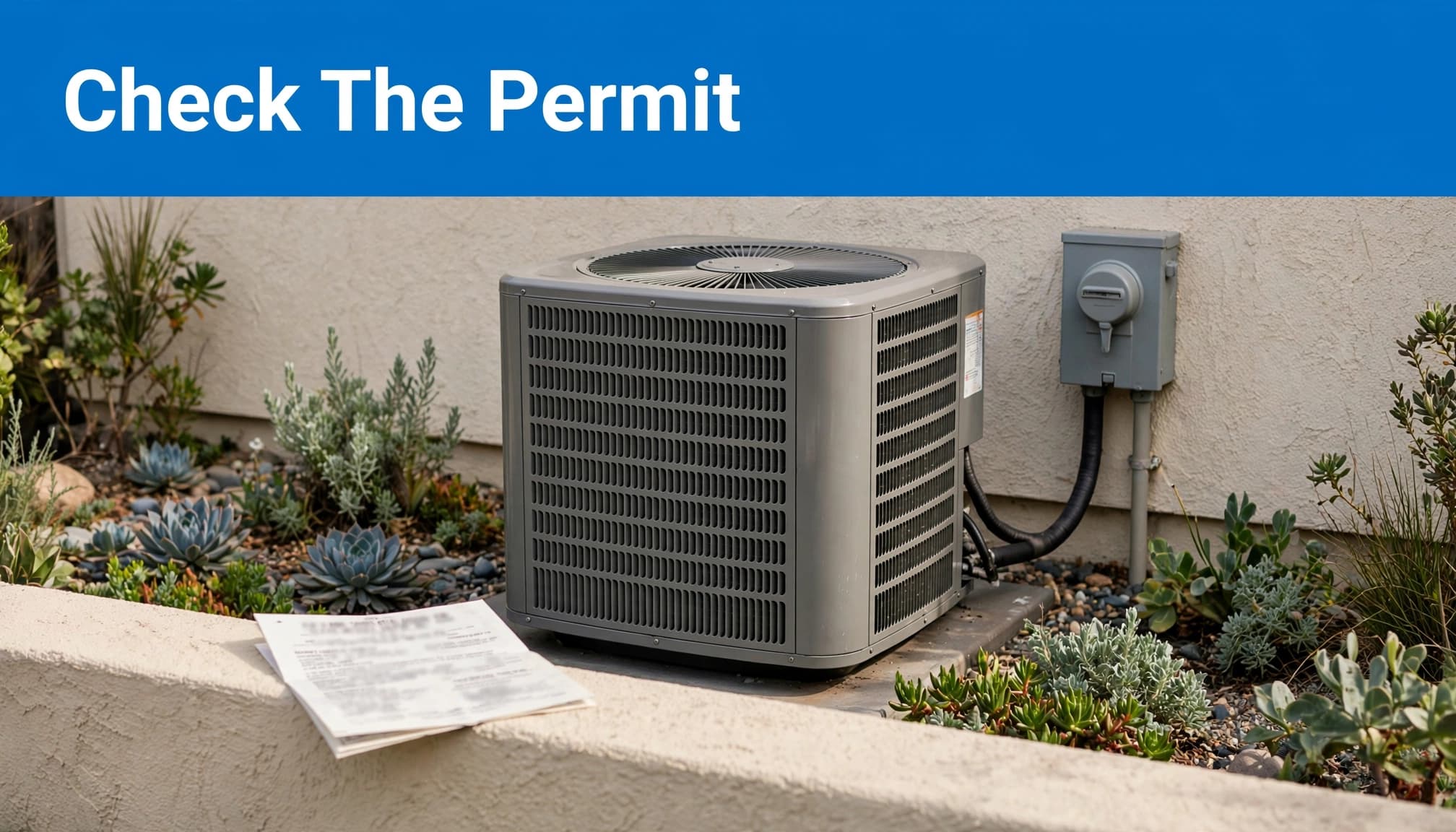
“We never pull permits for replacements” should stop the conversation until you verify the requirement independently.
Orange County isn’t one permitting jurisdiction. City processes differ, and unincorporated addresses may fall under county authority. Irvine, for example, has a residential air-conditioner and furnace replacement permit category.
Use this sequence before installation:
- Identify the building department responsible for your property address.
- Describe the equipment replacement and any electrical, duct, or location changes.
- Confirm with that department whether a mechanical permit, other permits, inspections, or testing apply.
- Put application responsibility, fees, and final approval documentation into the agreement.
A regional HVAC permit and code guide can help you understand the process. However, confirm requirements for your address rather than assuming another city’s rules apply.
Ask whether required energy-code testing is included or separately priced. The contractor should explain any applicable testing instead of promising a universal checklist.
Skipping required permits can leave work unreviewed and require correction later. Don’t accept blanket claims about insurance, fines, or resale outcomes; those depend on the circumstances.
Also clarify who schedules the final inspection and addresses corrections. A permit application alone doesn’t establish that the installation received final approval.
Verify the Business Behind the Proposal
Match the License to Your Contract
Use the CSLB contractor license lookup immediately before signing to avoid hiring an unlicensed contractor. Search the license number, then open the record rather than stopping at a matching business name.
For typical residential heating and air conditioning installation, look for the appropriate C-20 Warm-Air Heating, Ventilating and Air-Conditioning classification.
Match the record’s business name to your agreement. Confirm active status, then review bond information, workers’ compensation details, and disclosed disciplinary information.
Also identify who supervises installation and whether subcontractors handle separate electrical work. Their credentials should cover their assigned tasks.
Pre-screening through a referral service helps narrow your choices, but it doesn’t replace your own current check.
Check Insurance and Refrigerant Credentials Separately
A state license number doesn’t establish current general liability coverage. Request an insurance certificate matching the contracting business and confirm coverage with the issuing agent.
Workers compensation and general liability address different risks. Ask about both rather than accepting “we’re insured” as a complete answer.
For covered refrigerant work, ask who performs it and whether that technician holds the appropriate certification. The EPA Section 608 certification requirements require technicians to pass an EPA-approved test.
That individual credential differs from the contractor’s California license. Neither replaces the other.
Finally, confirm that the removal scope includes refrigerant recovery. A casual promise to dispose of the old unit doesn’t explain how the contractor handles its refrigerant.
Read Warranty, Payment, and Financing Terms Closely
Parts Coverage Doesn’t Include Every Service Cost
A manufacturer’s parts warranty and an installing contractor’s labor warranty cover different obligations. Request the duration, exclusions, and service contact for each.
Ask whether the parts warranty includes diagnosis, travel, refrigerant, and labor to replace a failed part. Otherwise, a covered component can still generate an out-of-pocket service bill.
Confirm who registers the equipment and any registration deadline. Also review maintenance conditions and whether a proposed service agreement renews automatically.
A home warranty is a separate product. It shouldn’t substitute for documented installation coverage or make unequal proposals appear equivalent.
Compare the written terms in each HVAC installation quote, including fees and an itemized breakdown of what’s covered.
Pressure and Payment Terms Need Scrutiny
Same-day discounts and demands for full payment before work deserve a pause. Get upfront pricing, the offer, and cancellation terms in writing.
Payments should follow a payment schedule with clear milestones tied to work performed or materials delivered. Also define completion checks, unresolved corrections, and final documents.
If financing is involved, compare APR, term, fees, and total repayment. A low monthly payment can conceal a longer obligation.
Treat projected energy savings as estimates. Similarly, keep rebates separate until the contractor identifies the program, eligibility requirements, and application responsibility.
Don’t compare one contractor’s guaranteed price with another price reduced by an uncertain incentive. HVAC estimate red flags often become obvious when you separate firm commitments from sales assumptions.
Common Questions About HVAC Quotes
Does a missing Manual J calculation make a quote useless?
It leaves the sizing recommendation unsupported. Request the calculation or a documented sizing basis before accepting replacement capacity. Matching the old unit or quoting square footage alone doesn’t answer the question.
Is the lowest bid always a warning sign?
A low price isn’t proof of poor work. Compare equipment, labor, permits, testing, and exclusions. Then ask what explains the difference. A contractor should be able to discuss that without pressuring you.
Should repair quotes contain the same details as replacement quotes?
The scope differs. A repair proposal should identify the diagnosis, component, labor, diagnostic charge, and warranty. A replacement proposal needs equipment specifications and the broader installation scope.
What if the contractor says permits are unnecessary?
Check with the building department responsible for your address. Describe the actual work, including electrical modifications or equipment relocation, before relying on that statement.
Choose the Quote You Can Verify
The strongest proposal makes the equipment, supporting work, permits, warranties, payment terms, and upfront pricing easy to check. A low number without those details leaves you guessing about the final cost.
Focus on comparable written scope to compare replacement cost, then verify the contractor and resolve exclusions before signing. Three clear proposals are more useful than three totals.
Even during a breakdown, a few direct questions can help you avoid an installation agreement you’ll regret later.