Replacing your furnace can also be your chance to upgrade air conditioning. For Carlsbad homeowners, the heat pump vs furnace decision often depends on what already needs replacing, not simply which technology has the higher efficiency rating.
Carlsbad’s mild coastal winters make heat pumps a practical option, but electricity prices and installation requirements still matter. Start with your home’s heating demand, existing equipment, and actual utility bills before comparing proposals.
Key Takeaways
- A heat pump handles heating and cooling, making it worth considering when both your furnace and AC are aging.
- A gas furnace replacement can make sense when cooling equipment is newer; price a dual fuel system if conversion work is expensive.
- Compare complete installation scopes and operating costs using your SDG&E bills. Don’t assume advertised rebates are available for a new 2026 project.
Heat Pump vs Furnace: What Changes?
Moving heat versus burning gas
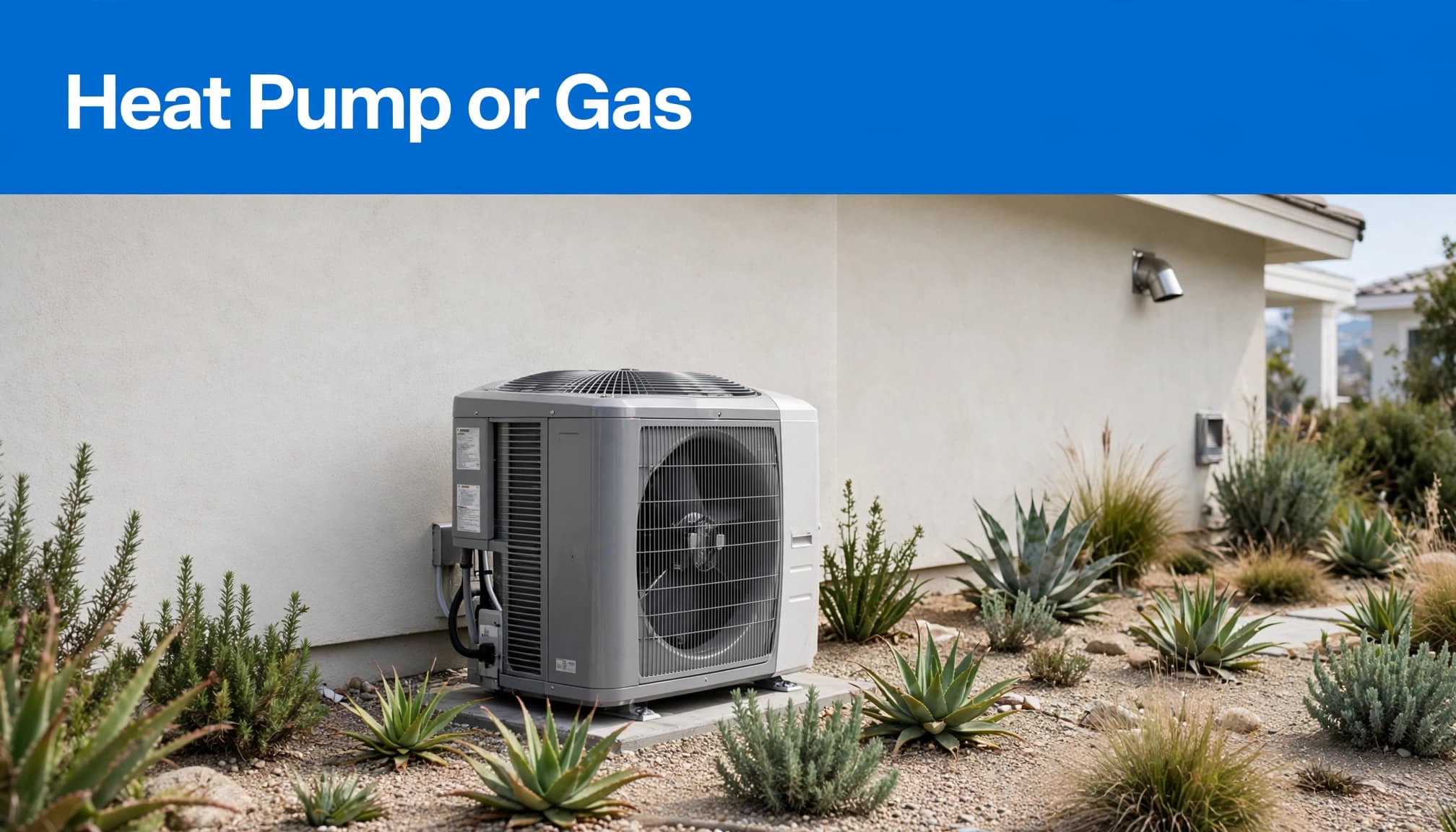
A gas furnace burns natural gas and transfers that heat through a heat exchanger. Its blower then distributes warmed air through your ducts.
An air-source heat pump uses electricity and refrigerant to collect outdoor heat and move it indoors. Even cool outdoor air contains usable heat.
Because it transfers heat, a heat pump can deliver more heating energy than the electricity it consumes. However, that efficiency advantage doesn’t automatically mean lower bills. Electricity and gas have different prices, so operating costs require a separate calculation.
Heating and cooling in one system
During summer, a heat pump reverses its operation and removes heat indoors, just like an air conditioner. You don’t need a separate conventional AC unit.
A furnace provides heating only, while a dual fuel system pairs a heat pump with a gas-burning furnace. A complete comparison usually means evaluating a heat pump against a furnace-and-AC combination.
For a split heat-pump installation, you’ll still have outdoor and indoor equipment. Ask about the complete matched system, including the thermostat and controls, when comparing heat pump installation in Carlsbad.
Why Carlsbad’s Climate Favors Heat Pumps
Size for your address, not a regional average
Carlsbad’s mild winters generally suit air-source heat pumps. However, coastal homes near Carlsbad Village may have different heating needs than homes farther inland around La Costa or Calavera Hills. This coastal-to-inland microclimate should guide heat pump installation sizing.
Insulation, window area, sun exposure, and air leakage also affect demand. Ask for a Manual J load calculation, with documented weather conditions appropriate to your property.
Don’t replace an old system with the same nominal size by default. Oversizing can cause short cycling and uneven temperatures. Meanwhile, undersizing can leave rooms uncomfortable during peak conditions.
Carlsbad’s relatively light heating demand also limits annual fuel savings. Compared with a cold climate, a premium-efficiency upgrade may take longer to repay its added cost.
Backup heating depends on capacity
Modern heat pumps can heat homes below freezing, but performance varies by model. There’s no universal outdoor temperature when every heating system needs backup.
The relevant threshold is where the heat pump’s available heating capacity falls below your home’s demand. Ask the contractor to compare those figures at the selected winter design temperature.
If electric resistance strips are proposed, request their capacity, electrical requirements, and control settings. They can raise electricity consumption substantially when operating.
A dual fuel system combines a heat pump with a gas furnace. It can switch based on capacity or operating cost, but Carlsbad homeowners shouldn’t assume that added equipment is necessary.
Compare Operating Costs Using Your SDG&E Bills
Understand COP and AFUE
A heat pump’s coefficient of performance, or COP, compares heat delivered with electricity consumed. COP changes with outdoor temperature and operating conditions, so one favorable test point doesn’t show seasonal energy efficiency or determine your bills.
For a furnace, annual fuel utilization efficiency, or AFUE, measures heat output relative to fuel input. The Department of Energy’s explanation of AFUE helps clarify this rating.
Ask for estimated seasonal heat-pump performance and the proposed furnace’s AFUE. Both calculations should use the same useful heating demand.
For equal delivery of 100,000 Btu of heat, compare these energy costs:
| System | Heating energy cost |
|---|---|
| Heat pump | 29.3 × electricity price per kWh ÷ seasonal COP |
| Gas furnace | Gas price per therm ÷ AFUE expressed as a decimal |
For example, enter 0.95 for a proposed 95% AFUE furnace. This calculation compares energy costs, not installation costs.
Account for timing, solar, and fixed charges
Use marginal energy prices from your SDG&E utility bills rather than dividing the entire bill by usage. SDG&E’s residential pricing plans include time-of-use options with peak pricing from 4 to 9 p.m.
Consequently, your heating schedule matters. Solar panels can reduce purchased electricity, but evening demand and your billing arrangement affect savings. Panels don’t guarantee nearly free heating.
Also, don’t count gas service charges as avoided costs if other gas appliances remain connected.
Finally, compare total ownership costs over the same period. Include the net installation price, maintenance, and repairs. Compare modeled operating costs for the heat pump, gas furnace, or dual fuel system.
Installation Costs Depend on the Whole Project
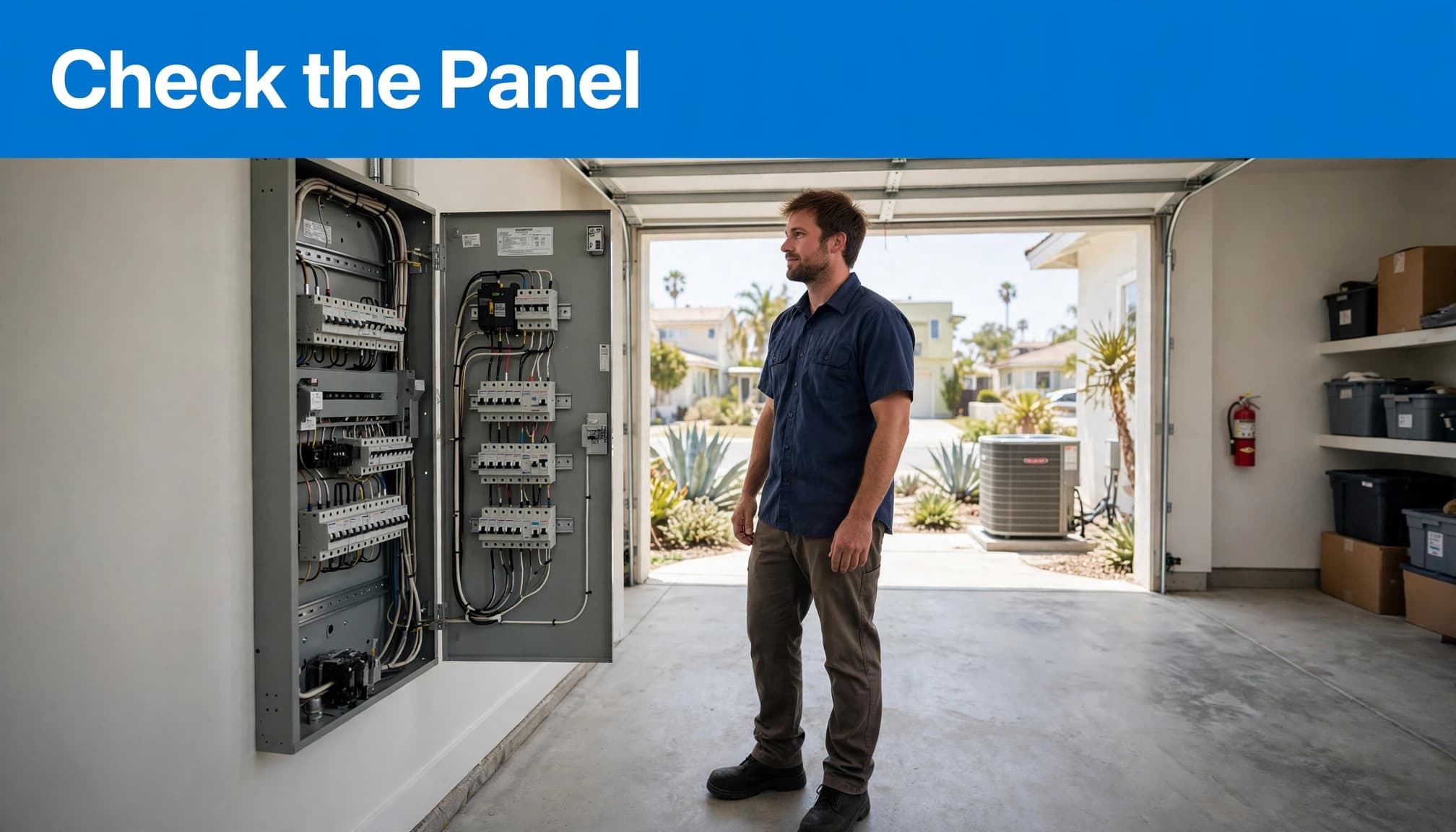
Check electrical capacity before signing
A heat pump installation to replace a gas furnace may require a dedicated circuit, disconnect, wiring, or electrical panel changes. However, a panel upgrade isn’t automatic.
Have the contractor document available capacity and perform the appropriate electrical load calculation. This matters even more if you also have an EV charger, electric cooking equipment, or planned electrification projects.
If backup heat strips are included, their electrical demand belongs in that assessment. A compressor-only proposal and one with resistance backup can have different requirements.
Electrical work can affect the installation cost, so ask the contractor to separate required work from optional upgrades. Ask whether service changes, utility coordination, permits, and inspections are included.
For a dual fuel system, make sure the proposal includes both the equipment and controls.
Evaluate ducts, venting, and installation details
Existing ductwork may be reusable, but heat pumps often need different airflow than the furnace they’re replacing. Request a duct inspection and static-pressure testing rather than a visual guess.
Undersized returns, restrictive ducts, and leakage can undermine comfort with either system. Specify proposed sealing or modifications before comparing totals.
For a condensing furnace, confirm the approved venting route and condensate drainage. For a heat pump, confirm refrigerant-line suitability, drainage, thermostat compatibility, and outdoor-unit placement.
A complete quote should also identify equipment model numbers, the air handler, disposal, startup testing, and applicable Title 24 documentation. These details explain why two apparently similar proposals can have different prices.
For furnace replacement in Carlsbad, request the same level of detail as you would for an electric conversion.
Heat Pump Rebates and Tax Credits in 2026
The federal 25C credit has ended
Older heat-pump advice often advertises a 30% federal tax credit, subject to a $2,000 annual heat-pump limit. That information doesn’t apply to new installations placed in service in 2026, so the federal tax credits under 25C aren’t available for them.
The IRS states that the Energy Efficient Home Improvement Credit applies to qualifying improvements made through December 31, 2025.
If a contractor subtracts this credit from a 2026 proposal, ask them to correct the net-cost calculation. Your purchase decision should use incentives that apply to your heat pump installation date, equipment, and circumstances.
California funding requires confirmation
As of October 2026, TECH Clean California reports that single-family HEEHRA rebates were fully reserved statewide as of February 24, 2026. New single-family income-verification applications and reservations were no longer accepted.
Check the current TECH Clean California incentive status before treating any advertised rebates and incentives as available funding.
For other programs, request written eligibility requirements, reservation confirmation, and application responsibilities. Equipment eligibility alone doesn’t guarantee payment, and a contractor’s estimate shouldn’t replace approval from the program.
Choose Around the Equipment You Already Own
Match the replacement to your situation
When comparing heat pump installation options, the condition of your current equipment often matters more than a broad efficiency claim.
Use these situations to focus your comparison:
| Your situation | Option worth pricing |
|---|---|
| Both furnace and AC need replacement | A complete heat-pump system |
| Furnace has failed, but air conditioner is newer | Furnace replacement alongside a conversion quote |
| Home lacks usable ductwork | Ductless mini split heat pumps |
| Electrical conversion is costly | Gas replacement compared with full conversion costs |
A heat-pump quote replacing both heating and cooling shouldn’t be judged against a furnace-only quote.
If your existing cooling system has a repairable problem, get an AC repair diagnosis before replacing otherwise serviceable equipment. Similarly, don’t discard a newer furnace without accounting for its remaining value or asking whether a dual fuel system makes sense.
Include maintenance and coastal exposure
Heat pumps need attention to coils, refrigerant operation, airflow, and electrical components. Gas furnaces also require checks of combustion, venting, and the heat exchanger.
Because coastal salt exposure can corrode outdoor equipment, ask about manufacturer-approved cleaning and coastal protection options. Ask contractors about the recommended maintenance schedule and placement that allows service access while limiting noise near bedrooms or neighboring homes.
Compare labor warranties separately from manufacturer parts coverage. Ask who handles warranty service and what maintenance records are required.
A heat pump removes combustion from the heating system itself. However, carbon monoxide precautions still matter if other fuel-burning appliances remain in the home.
Frequently Asked Questions
Will a heat pump feel warm enough?
A properly sized heat pump can maintain comfortable indoor temperatures in Carlsbad. Its supply air may feel less hot than furnace air, and it may run longer at lower output.
Judge performance by room temperature and comfort, not by how hot the air feels at one vent. Poor airflow or sizing can create problems with either technology.
Can I use a ductless mini split instead?
Yes. Ductless heat pumps can suit homes without ducts, additions, or rooms needing separate temperature control.
However, one indoor unit doesn’t automatically serve every closed bedroom. Ask for a room-by-room plan showing indoor-unit locations, heating and cooling loads, drainage, and electrical work. Compare the entire proposed installation with a ducted alternative.
Make the Decision With Comparable Quotes
Carlsbad’s climate makes a heat pump worth pricing, especially when both heating and cooling systems need replacement. Compare heat pump installation costs, and consider a dual fuel system only when existing equipment and project costs make it practical. Keeping a gas furnace may still be economical when current equipment or conversion costs favor it.
The strongest comparison uses itemized, equivalent proposals and your actual utility rates.
Through Carlsbad HVAC services, 3HVACQuotes connects homeowners with up to three licensed, insured, pre-screened local professionals. Compare scope, warranties, and projected costs before choosing, with no obligation.